
PACKAGING & SHIPPING
How Packaging Size Affects Shipping Costs for Brands
When choosing a custom paper bag or gift box, most brands begin with one practical question: will the product fit?
That is essential, but it is only part of the decision. The size and structure of the packaging also affect how it will be packed, stored and transported. A box that looks economical on a unit-price quotation may cost more after master cartons, freight and handling are included.
This does not mean every package should be made smaller. Good packaging still needs to protect the product, feel appropriate for the brand and give the customer the right experience. The aim is to consider product fit, presentation and shipping together before production begins.
Why lightweight packaging can still be expensive to ship
Paper bags, folding cartons and gift boxes are often light for their size. This is useful when products are carried by hand, but it can create a different issue during transport: the shipment may take up more space than its actual weight suggests.
For many courier and air services, the carrier calculates both actual weight and dimensional, or volumetric, weight. The chargeable weight is generally based on whichever is higher.
The basic idea is simple:
Dimensional weight = length × width × height ÷ carrier divisor
The exact divisor, measurement rules and rounding method vary by carrier, route, service and customer agreement. For that reason, a supplier should provide the packed carton dimensions and gross weight, while the final freight calculation should be confirmed with the chosen carrier or forwarder.
For a brand, the important lesson is not the formula itself. It is that a larger package can increase shipping cost even when the product inside has not become heavier.
The box structure changes the shipping volume
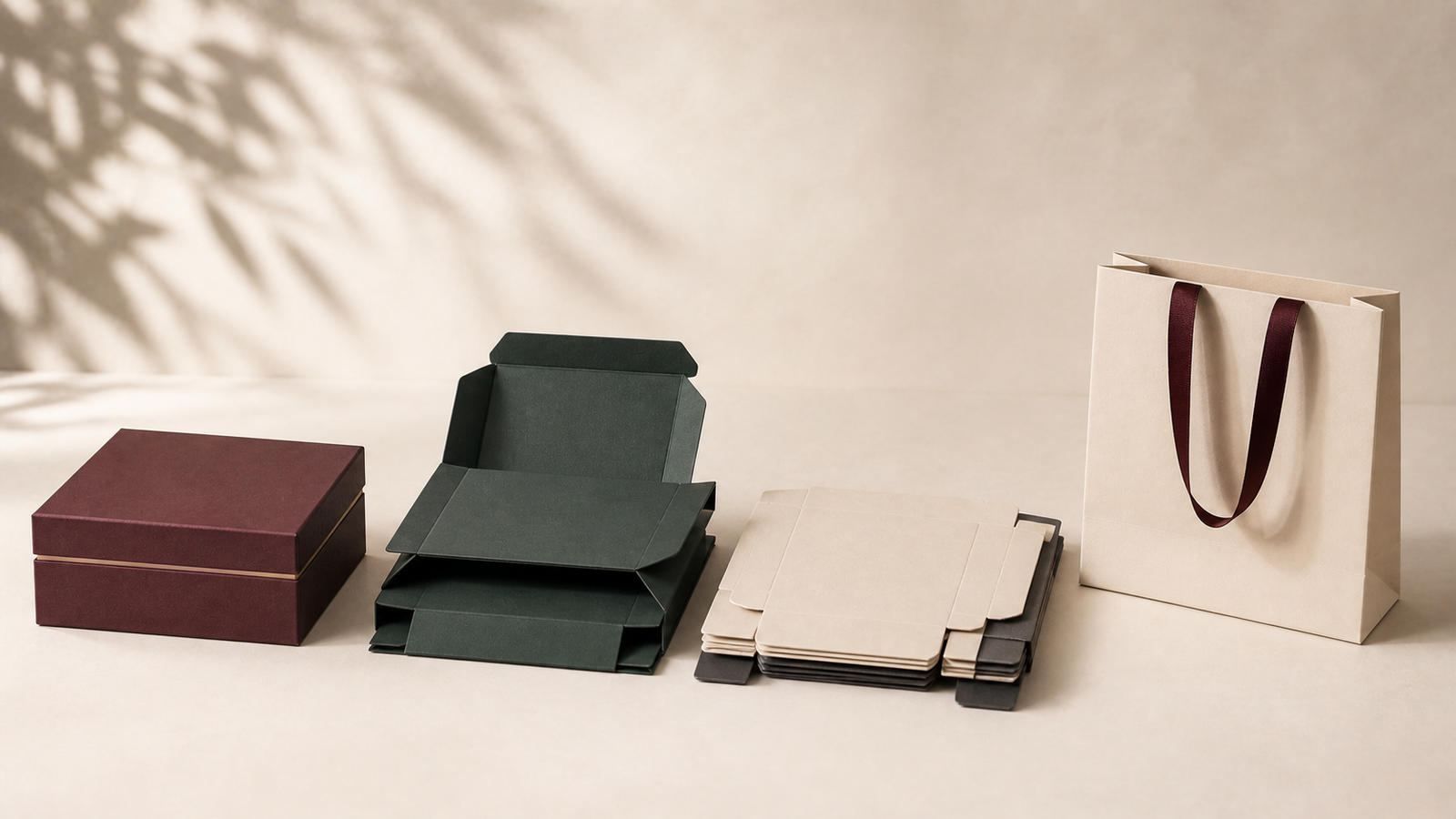
Two gift boxes with similar finished dimensions can have very different shipping requirements.
Folding cartons
Folding cartons are normally supplied flat. Many units can be packed into one master carton, which makes them efficient for transport and storage. They must be folded or assembled before use, but this is usually straightforward.
Collapsible rigid boxes
Collapsible rigid boxes are designed to ship flat and become a premium box after assembly. They can reduce freight and storage volume compared with a traditional setup box, while still offering a substantial presentation.
The trade-off is assembly. The brand, retailer or fulfilment team needs enough time and a clear process to form the boxes correctly. This labour should be considered when comparing the total cost.
Traditional rigid setup boxes
A traditional rigid box is delivered in its finished shape. It is ready to fill and can create a strong, premium unboxing experience. However, it cannot be flattened, so every empty box occupies nearly the same space it will occupy when holding the product.
For small orders or local delivery, this may be completely reasonable. For large international orders, the added volume can become a significant part of the landed cost.
Lid-and-base, drawer and magnetic boxes
The name of the box does not tell the whole shipping story. Some lid-and-base boxes can be nested; others cannot. Drawer boxes may be supplied assembled or in a collapsible construction. Magnetic boxes may be traditional setup boxes or flat-packed designs.
Always ask how the exact structure in the quotation will be packed—not only what the finished box will look like.
A few millimetres can change the master carton
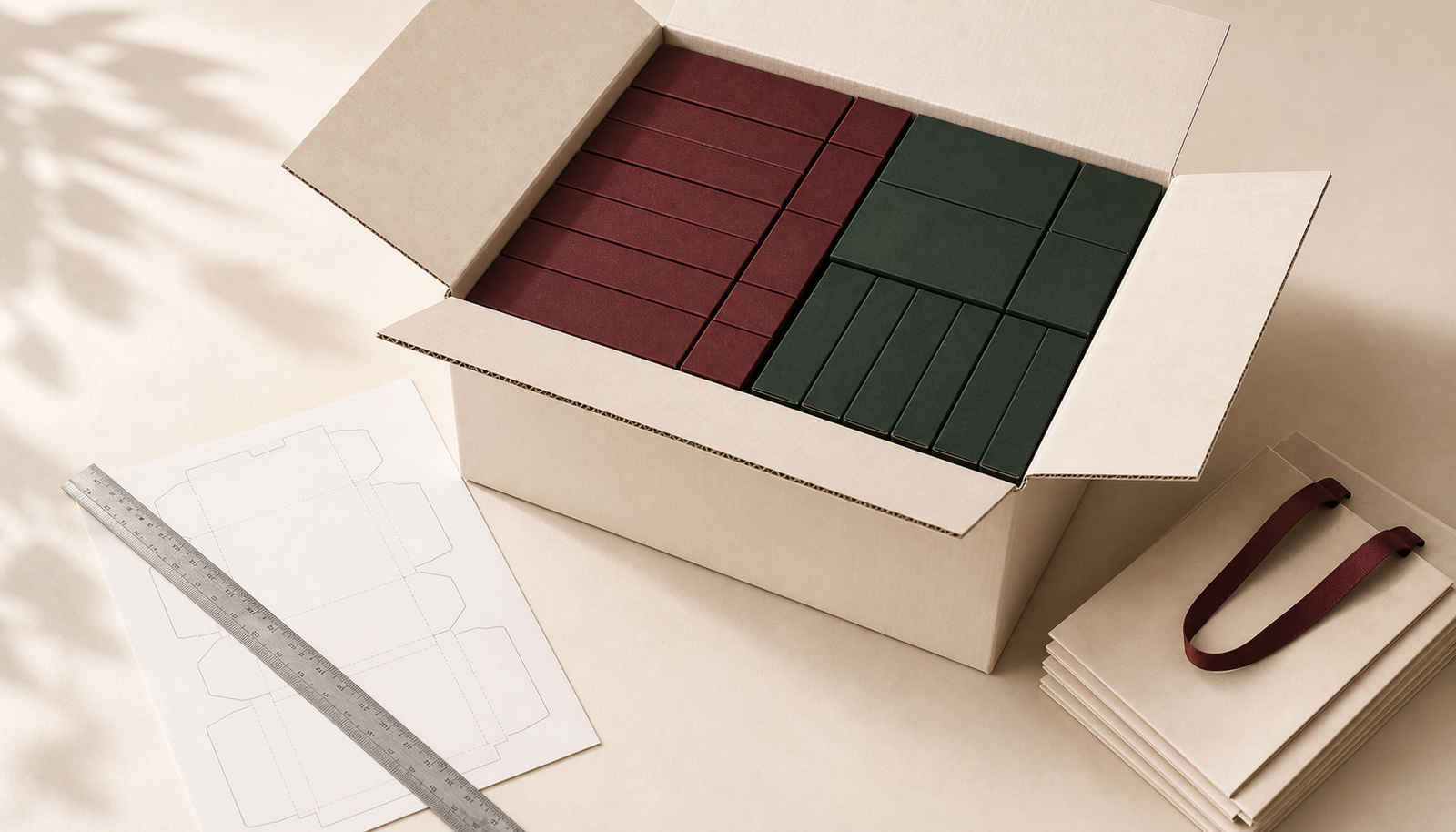
A difference of 5 or 10 mm may look unimportant on one package. Across hundreds or thousands of units, it can change the way the packaging fits into a master carton.
Imagine that one row of boxes almost fits across the carton, but the final box is a few millimetres too wide. The carton may need to become larger, or the row may contain one fewer unit. That can affect:
- the number of units in each carton;
- the total number of cartons;
- the external carton dimensions;
- the total shipment volume;
- carton handling and warehouse space.
The same principle applies vertically. A small change in box height may reduce the number of layers that fit safely in a carton.
This does not mean dimensions should be reduced blindly. A box still needs enough clearance for the product, insert and opening action. The useful question is whether every millimetre has a purpose.
Paper bags need carton planning too
Paper bags are flat products, but they are not automatically space-efficient. Their packed dimensions depend on several details:
- bag width and height;
- side and bottom gusset depth;
- paper thickness;
- reinforced turn-tops;
- handle material, length and attachment position;
- folding method;
- the number of bags packed per bundle and carton.
Rope or ribbon handles may sit inside the bag, lie across the top or need protection to prevent crushing and tangling. A deep gusset can make the bag more useful for the product, but it can also increase the folded footprint. Very large bags may require larger export cartons even when each bag is thin.
The best size is therefore not simply the smallest one. It is the smallest practical size that holds the product comfortably, carries well, protects the print and handles, and supports the intended retail experience.
What changes with courier, air, LCL and FCL shipping?
The same packaging order can produce different cost results depending on the transport method.
Courier and air freight
Courier and air shipments are particularly sensitive to dimensional weight. If a shipment is light but bulky, the space it occupies may determine the chargeable weight. Flat-packed structures and efficient master cartons can make a noticeable difference.
LCL sea freight
Less-than-container-load, or LCL, shipping combines cargo from different shippers in one container. Because the customer is using part of the container, cubic volume is an important part of the booking and pricing process.
LCL can be practical for orders that are too large for courier or air freight but do not need a full container. However, extra cartons or inefficient carton dimensions can increase the total CBM. Pallets, consolidation and local handling requirements may also add to the final shipping volume and cost.
FCL sea freight
Full-container-load, or FCL, shipping gives the customer the use of a complete container. The freight price is not calculated as a simple charge for each individual carton, but space efficiency still matters.
If master cartons do not fit together well, narrow gaps may remain between rows or above the load. Those gaps may be too small or unsafe to use. Poor cube utilisation means fewer packaging units in the container and, in the worst case, the remaining cartons may require another shipment.
There is no universal carton size that works for every container and every project. Carton dimensions must also protect the goods, remain within practical handling limits and suit any pallet plan.
Pallets, warehouses and fulfilment add another layer
Freight is not the only place where packaging volume matters.
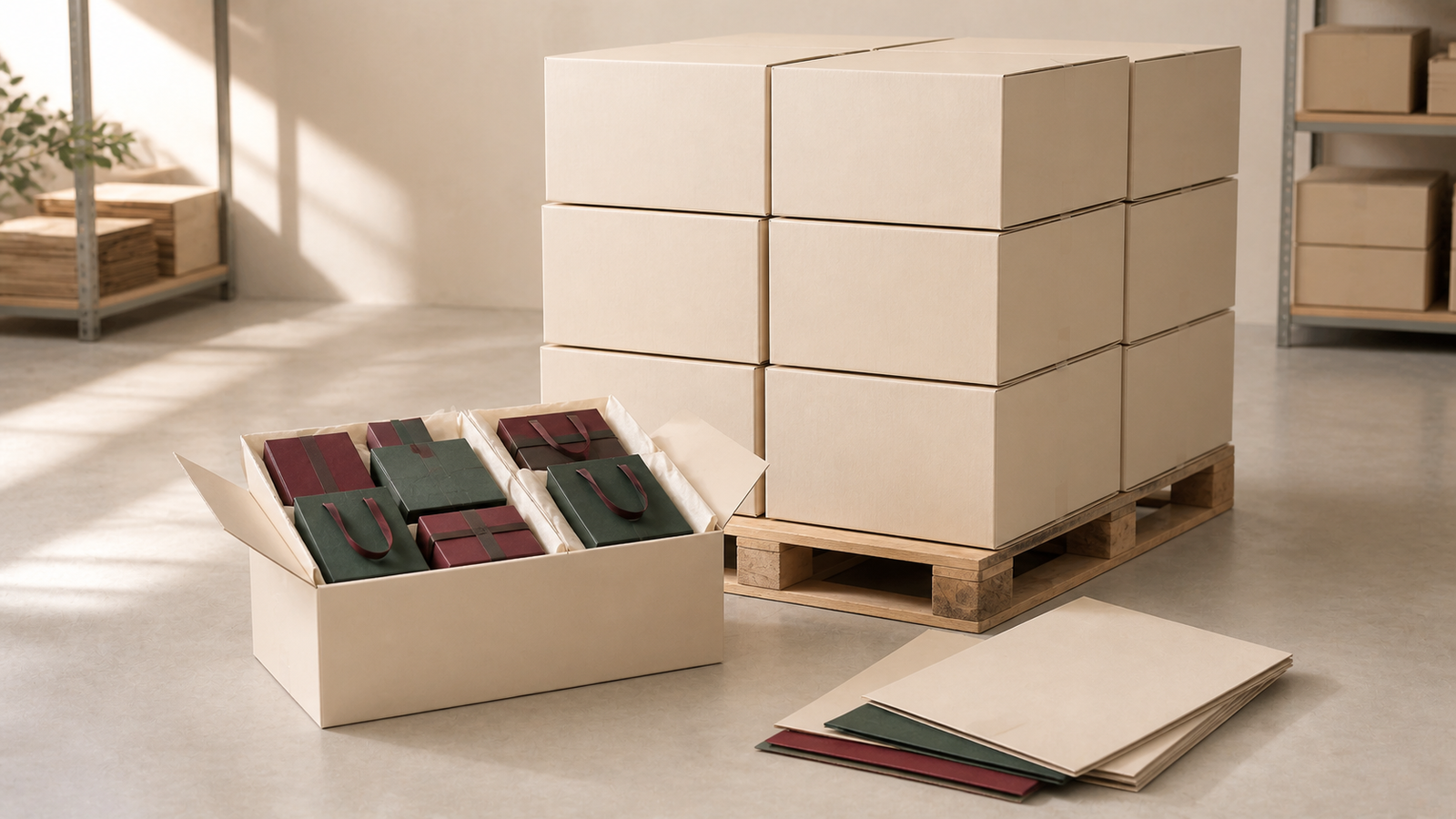
If cartons will be palletised, their dimensions should make sensible use of the pallet footprint. Cartons that overhang the pallet or create an unstable stack are difficult to handle and more vulnerable to damage. Very heavy or very tall cartons may also be impractical for warehouse teams.
After delivery, the empty packaging still needs somewhere to go. A premium setup box may arrive ready to use, but it needs more storage space. A collapsible box uses less space, but staff need time to assemble it. A folding carton may be the most compact option, but it may require forming and closing equipment at higher volumes.
These are operational costs, even when they do not appear on the packaging quotation.
Protection must come before false savings
Right-sizing does not mean removing all empty space.
Fragile products may need cushioning. Jewellery, cosmetics, glass bottles and electronics may need inserts that hold the product away from the box walls. A paper bag must have enough depth for the product to sit naturally without stretching the gussets or placing too much pressure on the handles.
Reducing the package by a few millimetres is not a saving if it causes scratched products, crushed corners, difficult packing or customer returns.
A better approach is to remove space that serves no purpose while keeping the space needed for protection, presentation and easy packing.
Compare the total landed packaging cost
When two suppliers quote different structures, the lowest unit price is not always the lowest final cost.
A useful comparison should include:
- Packaging unit price.
- Finished external and internal dimensions.
- Whether the packaging ships flat, nested or fully assembled.
- Units packed per master carton.
- Master-carton external dimensions and gross weight.
- Total carton quantity and estimated CBM.
- Pallet quantity and palletised dimensions, if applicable.
- Estimated courier, air, LCL or FCL freight.
- Assembly and fulfilment labour.
- Storage space before use.
- Product-protection and damage risk.
This creates a more realistic view of what the packaging will cost by the time it reaches the place where it is used.
What should you ask before approving the size?
Before approving a dieline or physical sample, ask the supplier these practical questions:
- What are the finished internal and external dimensions?
- Can this structure be shipped flat or nested?
- How many units fit in one master carton?
- What are the external carton dimensions and gross weight?
- What is the estimated total CBM for my order?
- Will the cartons be palletised?
- Does the box or bag need assembly before use?
- Can a small size adjustment improve the carton pack-out without reducing protection?
- Which shipping method is being assumed in the quotation?
The answers may not change the design. But they make the cost and delivery plan much easier to understand.
Design the packaging and the shipment together
Good custom packaging balances several needs at once. It must fit and protect the product, represent the brand, feel right in the customer’s hands and move through the supply chain efficiently.
For custom paper bags, that means coordinating the bag size, gusset, handles, folding method and carton quantity. For custom gift boxes, it means choosing between folding cartons, collapsible rigid boxes and traditional setup constructions with a clear understanding of freight, storage and assembly.
Bespoke Packaging helps independent fashion, jewellery, beauty and lifestyle brands compare these choices before production. We can review the product dimensions, presentation goals, order quantity and delivery destination, then recommend a paper bag or gift box structure that balances appearance with practical transport.
When requesting your next quotation, do not ask only for the unit price. Ask for the packed volume too.
Is your current packaging designed only around the product—or around the full journey from factory to customer?