
CUSTOM PACKAGING PROCESS
How to Order Custom Packaging: A Simple 5-Step Guide
The finished paper bag or gift box is the part everyone sees. But most of the important work happens before production begins.
A design can look complete on a screen and still need practical decisions. The size, paper, colour reference, logo position, finish and structure must all be clear enough for a factory to make the same result every time.
The good news is that ordering custom packaging does not need to feel complicated. A clear process turns the project into five manageable stages.
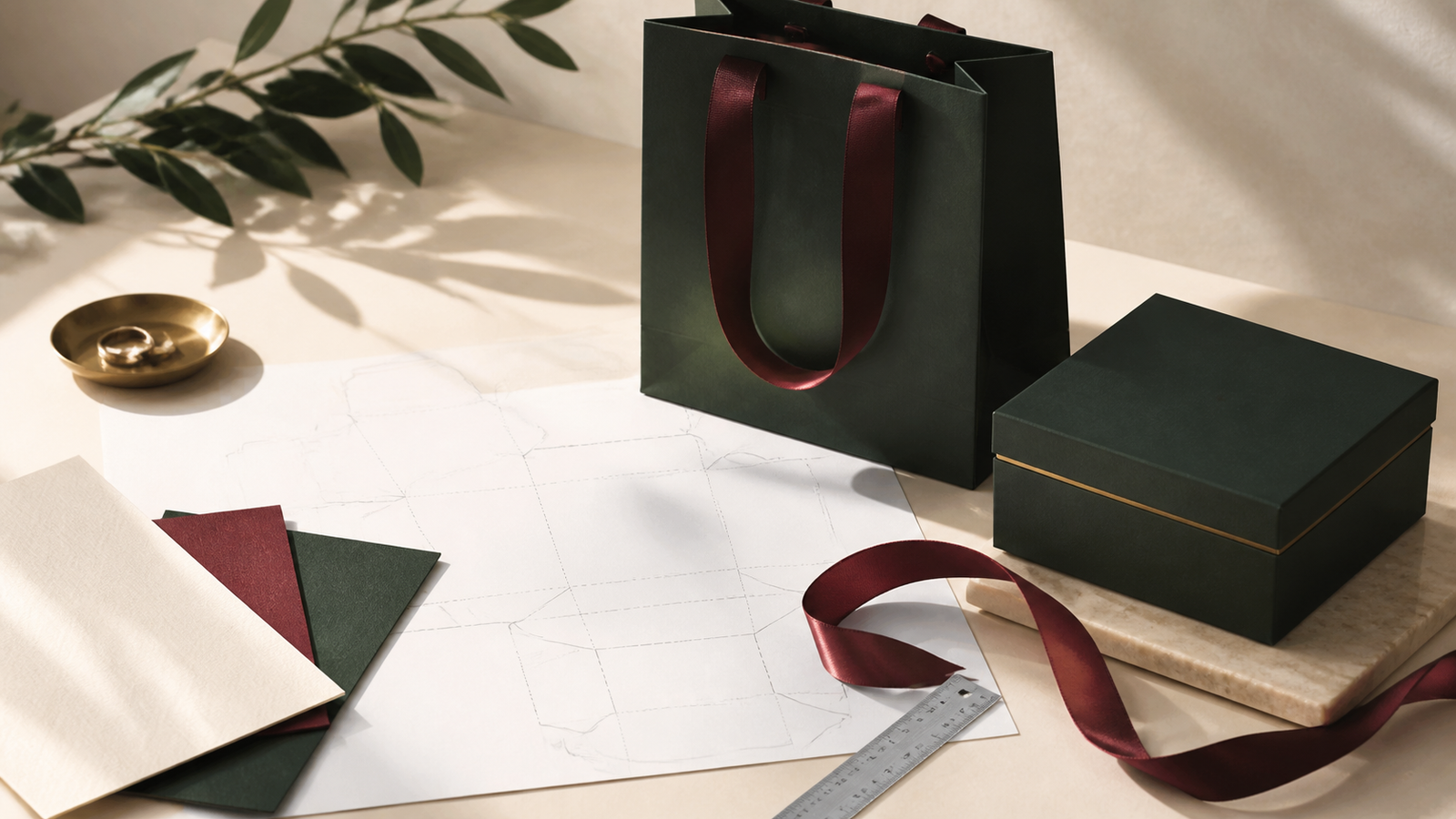
1. Brief and quote
The first step is to explain what you need. You do not need to know every technical term. Start with the information you already have:
- What product will go inside?
- What size should the bag or box be?
- How many pieces do you need?
- Where should the order be delivered?
- When do you need it?
- Do you have a preferred colour, paper or finish?
These details help us recommend a practical production route and prepare a useful quotation. They also help avoid comparing prices for two very different specifications.
For a custom paper bag, we may discuss paper weight, handle style, reinforced turn-tops and printing. For a gift box, we may also need to consider the opening style, internal space and whether the product needs an insert.
If you are unsure, send the product dimensions, a photo and a reference image. We can help narrow down the options.
2. Design support
Once the basic specification is agreed, the design must be prepared for the actual package.
A dieline is the flat template that shows cut lines, folds, panels and glue areas. Artwork is placed on this template so the logo, text and graphics appear in the correct position after the bag or box is assembled.
At this stage, we check the size and structure, logo and artwork placement, colour references, print files, finishing details and safe space around folds, edges and handles.
Small changes here can prevent costly mistakes later. For example, a logo that looks centred on a flat file may move too close to a fold when the package is assembled.
3. Sample and approval
Sampling gives you a chance to answer the most important questions before the full order is made.
The right type of sample depends on the project. A digital mock-up may be enough to confirm artwork placement. A material sample can help you compare paper, colour and finish. A complete physical sample lets you check the structure, size and overall appearance together.
For paper bags, a sample can confirm the proportions, handle length and paper feel. For gift boxes, it can show how the lid, drawer, magnet or insert works with the product.
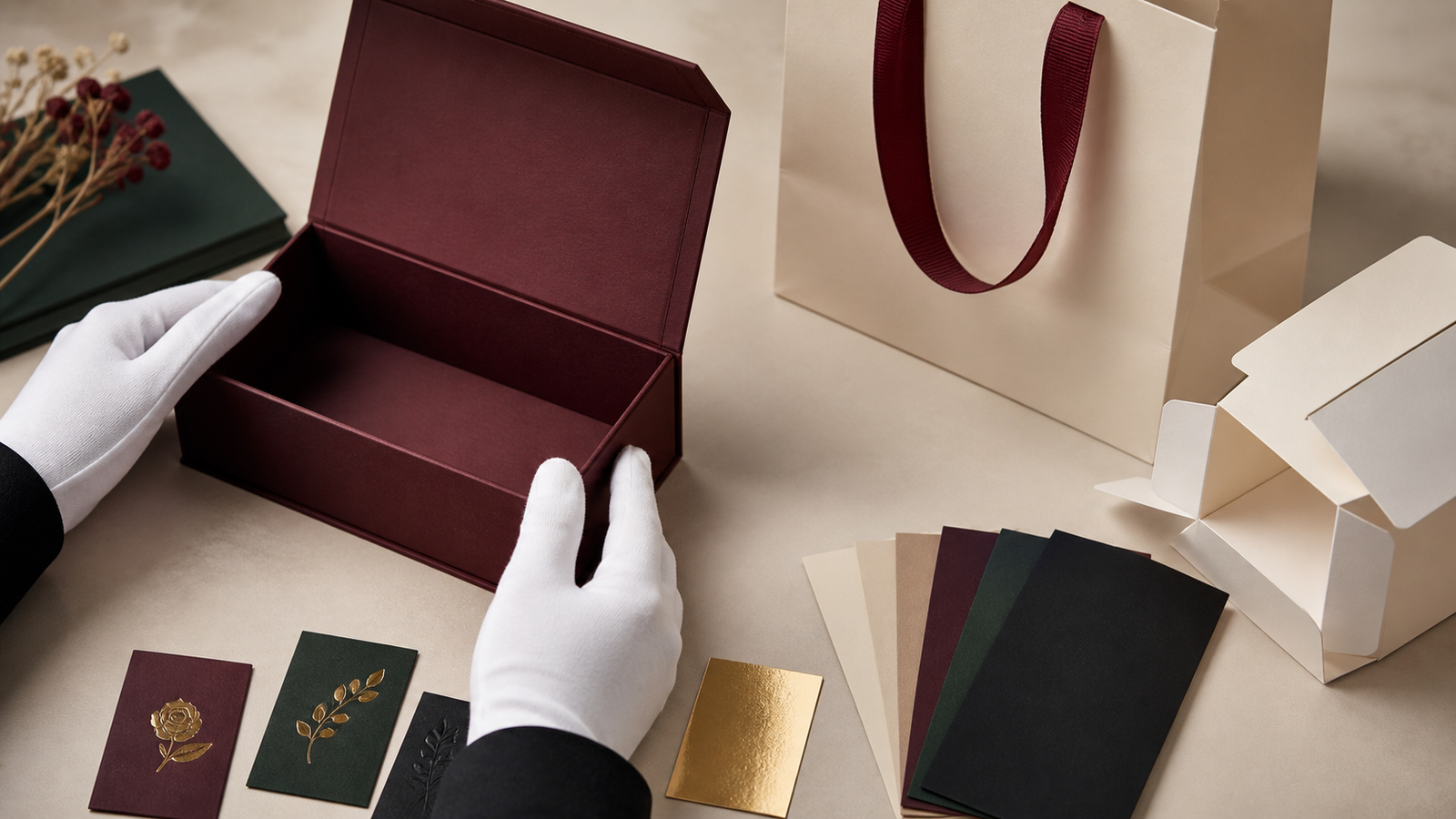
4. Make and check
Production begins after the specification, artwork and required sample are approved.
The packaging is printed, finished, cut and assembled according to the confirmed details. Quality checks cover print and colour consistency, logo position, clean edges and folds, bag handles, box fit, inserts and packing before dispatch.
Premium packaging is not only about appearance. A paper bag should feel comfortable to carry. A gift box should protect the product and create the right opening experience.
5. Deliver
Shipping should be discussed early, not added at the end.
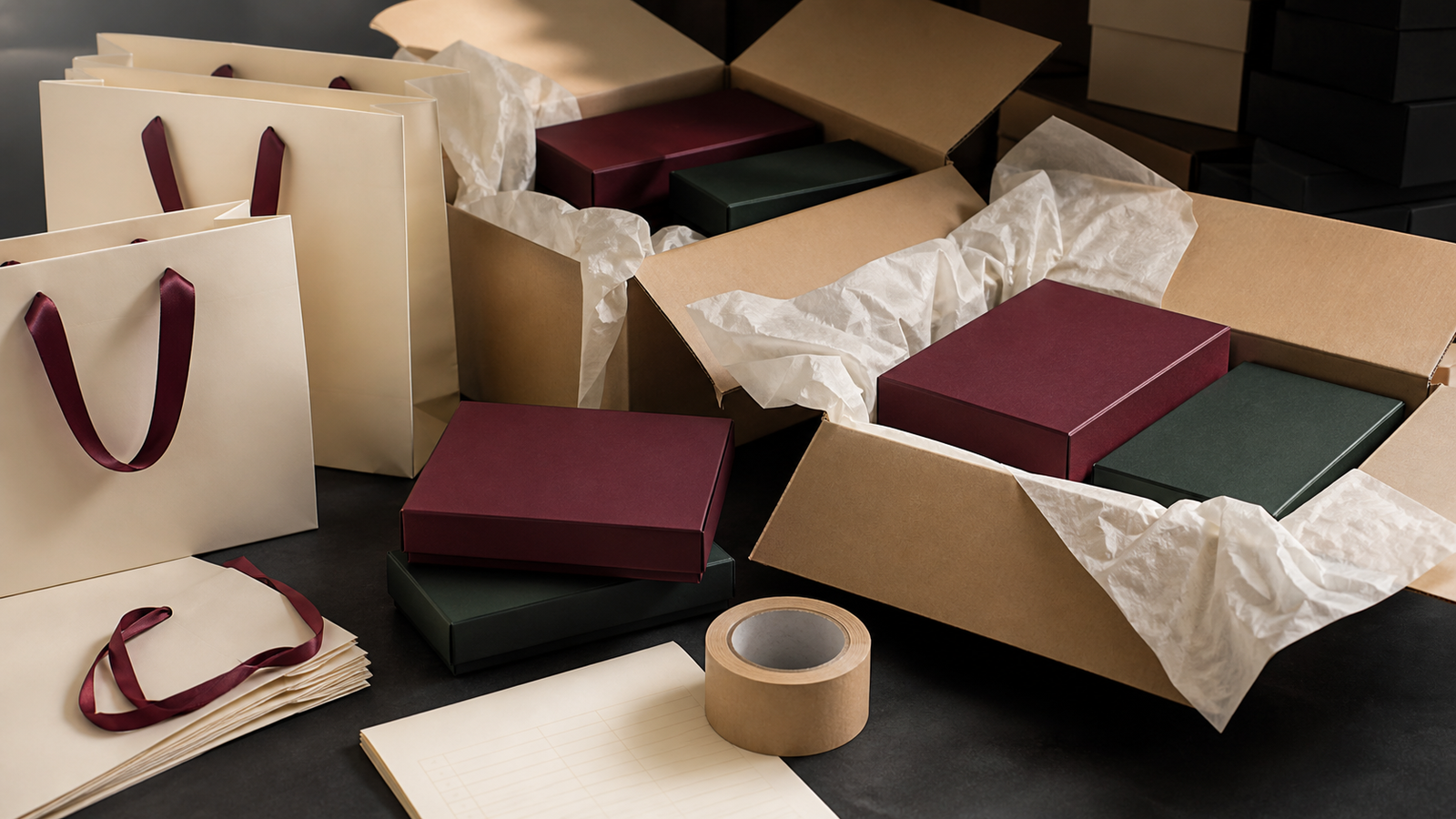
The best shipping method depends on the order volume, package size, destination, required arrival date and budget. Some packaging formats can ship flat, while assembled rigid boxes may use more space. This can affect both freight cost and storage.
If a launch date is fixed, work backwards from the required delivery date. Allow time for artwork checks, sampling, production, shipping and a sensible buffer for revisions or transit delays.
What should you prepare before requesting a quote?
- Product dimensions or the size of the packaging you need.
- Estimated order quantity.
- Preferred bag or box style.
- Logo or artwork, if available.
- Colours, materials or finishes you like.
- Delivery country and postcode.
- Target delivery date.
Do not worry if the list is incomplete. A good packaging partner should help turn an early idea into a clear production brief.
Paper bags or gift boxes: where should you start?
Custom paper bags are ideal for boutiques, events, launches and in-store purchases. The right paper, handle and finish can make a practical carrier feel like part of the brand experience.
Custom gift boxes are useful when presentation and protection matter. Rigid boxes, drawer boxes, magnetic boxes and lid-and-base boxes can all create a premium reveal, while fitted inserts keep products secure.
Many independent brands use both: a gift box for the product and a matching paper bag for the final handover. Coordinating the colours, materials and finishes creates a more complete result without making the design feel busy.
A clear process makes custom packaging easier
Good custom packaging is not only a beautiful finished product. It is a series of clear decisions made at the right time.
When the brief, artwork, sample, production details and delivery plan are visible, customers know what has been approved and what happens next. That is how we help independent fashion, jewellery, beauty and lifestyle brands order premium paper bags and gift boxes in practical quantities.
If you are planning a new packaging project, send us your product size, quantity, destination and any design references. We will help you choose a practical next step.
Which part of the custom packaging process creates the most uncertainty for your team?