
CUSTOM SHOULDER-NECK BOX GUIDE
Shoulder-Neck Boxes: A Buyer’s Guide to Luxury Packaging
Specify the lid, base, raised neck, insert and retail carrier as one luxury packaging system—then approve the reveal with the real product inside.
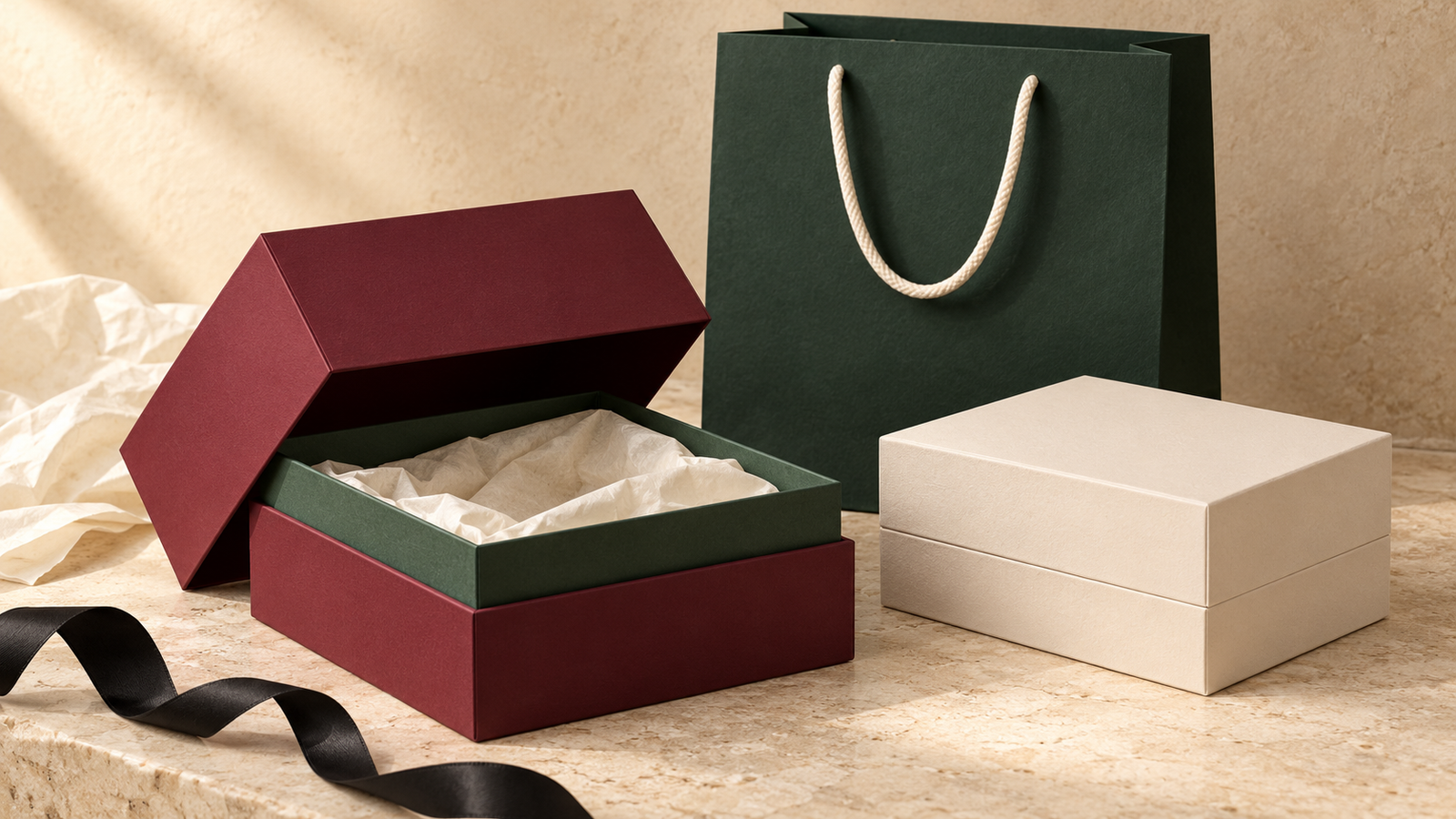
Custom shoulder-neck boxes are three-piece rigid boxes with a lid, base and raised inner collar. The collar guides the lid and can remain partly visible as a contrasting “shoulder” when the box is closed. The style can create a precise, layered reveal, but only when neck height, lid fit, insert, wrap paper and packed product are developed together.
The short buyer answer
Choose a shoulder-neck rigid box when the product benefits from a lift-off lid, a crisp visible reveal line and an insert that presents the contents from above. Do not approve the structure from a rendering alone. A production-relevant physical sample should prove lid seating, neck alignment, corner quality, product fit, opening effort and the complete shipping pack.
What is a shoulder-neck rigid box?
Lid
The separate wrapped lid lifts away. Its depth, squareness and internal dimensions determine how evenly it seats over the neck.
Raised neck
The inner collar rises above the base. It guides closure, carries part of the reveal and can be colour-matched or intentionally contrasted.
Base and insert
The base supports the neck and insert. The product load, removal path and required protection should determine the internal architecture.
You may also see the format called a neck box, collar box, three-piece rigid box or shoulder box. Supplier terminology is not perfectly consistent, so an RFQ should include a section drawing or approved reference sample. The distinguishing feature is the separate raised collar fixed inside the base—not simply a two-piece lift-off lid box with a tight fit.
When does this structure make commercial sense?
Strong reasons to shortlist it
- The product should be presented from above after the lid is lifted.
- A visible shoulder line supports the brand’s colour or material hierarchy.
- The insert needs a stable rigid base and defined reveal depth.
- The box may be retained for storage after purchase.
- A fully assembled premium structure fits the budget and logistics plan.
Reasons to compare another format
- Flat shipment and fast store assembly are more important than a fixed form.
- The lid must stay attached during opening or repeated access.
- The product requires a sliding rather than top-down reveal.
- Freight volume cannot support an assembled rigid structure.
- A folding carton can provide the required protection and experience with less material.
Compare the decision with our rigid box styles guide. A magnetic hinged box keeps the cover attached, while a drawer box creates a sliding reveal. None is automatically more luxurious; the right structure is the one that performs the intended job with controlled complexity.
How do neck height and reveal change the experience?
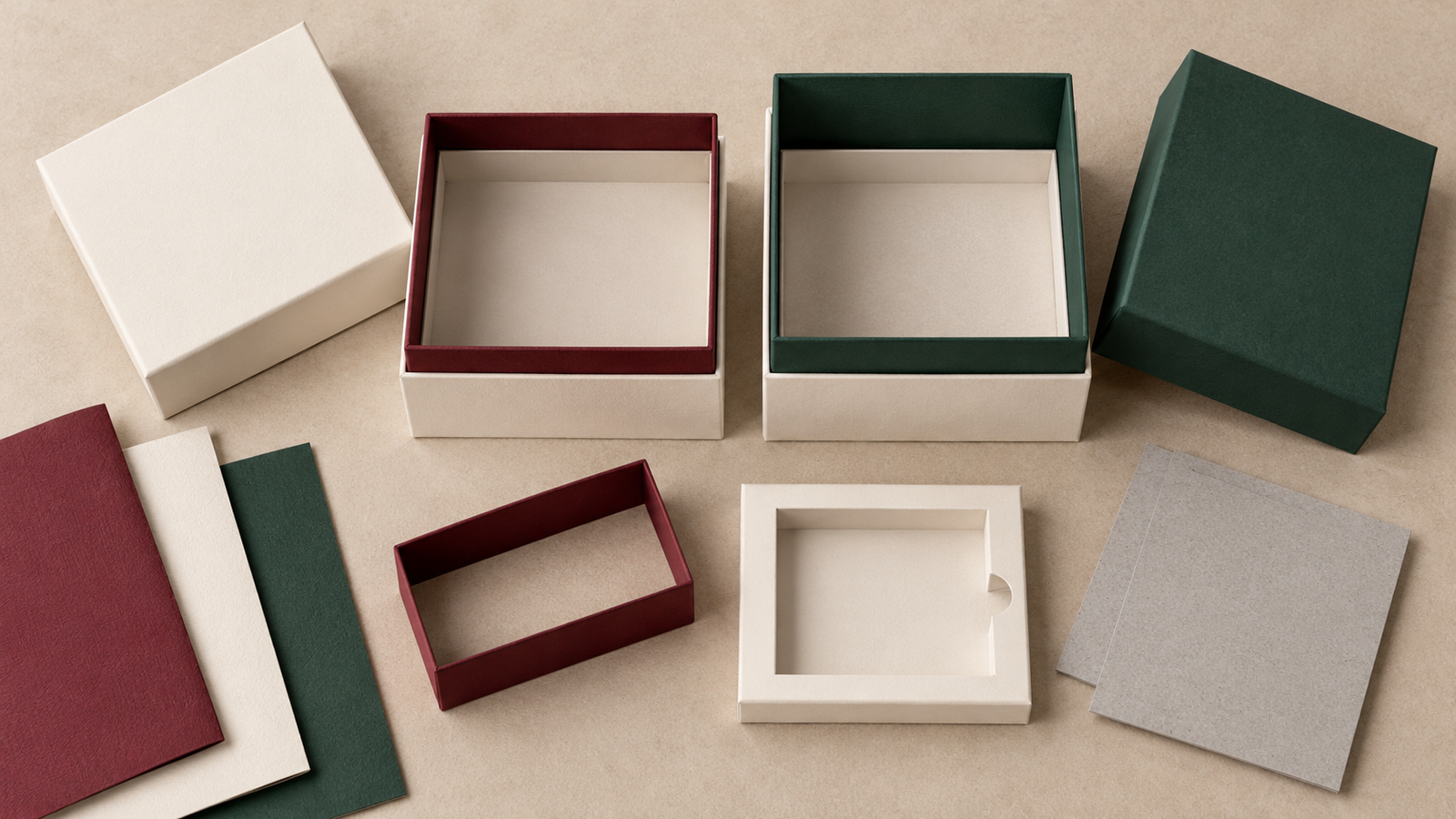
A taller exposed neck creates a stronger band of colour and a more pronounced step between lid and base. A lower or hidden neck produces a quieter exterior but leaves less visible material to guide the lid. The choice changes more than appearance: neck height, overlap and board build affect lid alignment, resistance to side movement and the area available for bonding.
Define the intended closed condition in the specification. State whether the lid should meet the base, leave a deliberate shoulder gap or sit at a controlled distance above it. Use drawings and a signed physical sample rather than descriptive words such as “snug” or “premium,” which different suppliers may interpret differently.
How should you size the box and insert?
Measure the finished product and every component that remains with it: primary pack, protective sleeve, instructions, accessories, ribbon and any product projections. The current GS1 Package and Product Measurement Standard provides a consistent method for recording package dimensions between trading partners. Record product, completed presentation box and transport pack as separate levels.
- Fix the presentation orientation. Decide which face the customer sees first and how staff or fulfilment teams place the product.
- Develop the insert around the real product. Control movement without making removal awkward or damaging.
- Set the reveal depth. The product may sit flush, recessed or staged above an accessory layer.
- Build outward. Add insert, lining, neck, base and lid dimensions from the approved internal arrangement.
- Check the retail carrier. Size the luxury paper bag around the closed finished box, tissue and documents—not the product alone.
There is no universal clearance for every shoulder-neck box. Wrapped-board caliper, paper thickness, adhesive build, humidity response, insert material, product variation and required removal force all influence fit. Prototype the most demanding packed combination before releasing tooling or bulk materials.
Which material and finish choices need joint approval?
A typical rigid box combines dense board, paper wraps, adhesives, an insert and optional decorative layers. Treat them as a construction, not a menu of independent upgrades. A thick textured wrap may change corner folding and lid clearance. Lamination can alter touch and scuff behaviour. Deep embossing or foil near an edge may interact with creases or wrapped corners.
Build one controlled colour hierarchy
Use the large exterior fields for the main brand tone, the exposed neck for a purposeful contrast, and foil or relief for one focal detail. Review the closed box, open reveal, insert, tissue, ribbon and paper bag together under agreed lighting. Paper, foil, fabric and coated surfaces will not reflect colour identically.
What should a production-relevant sample prove?

- Lid seating: the lid closes to the intended level without rocking, binding or drifting.
- Reveal consistency: the visible neck band and shoulder gap remain even around all sides.
- Squareness: lid, base and neck align without twisted corners or exposed board.
- Insert fit: the real product stays controlled but can be removed without damage or excessive force.
- Surface quality: wraps, seams, foil and relief tolerate realistic handling and opening.
- Pack-out: staff can place product, documents, tissue and ribbon consistently.
- Retail fit: the closed box enters and leaves the selected paper shopping bag without corner abrasion or wasteful empty space.
A white sample can prove proportions and opening behaviour; a printed prototype can establish colour and decoration; a fully finished pre-production sample should bring structure and appearance together. Agree which sample is authoritative and record every approved deviation. Our custom box insert guide explains how insert material and removal path affect the complete pack.
How should transport testing be planned?
A luxury presentation box is not automatically a shipping box. If it travels through parcel or export distribution, protect it inside an appropriate transport pack and test the packed-product system against the real route. ISTA distinguishes screening, partial-simulation, general-simulation and route-specific approaches; the right procedure depends on the shipment type and decision you need the test to support.
Stacking may also matter for warehousing and export cartons. ISO 2234:2000, confirmed current in 2022, covers static-load stacking tests for complete filled transport packages and unit loads. Do not claim that a box “passes shipping” without naming the complete pack, test method, conditions and acceptance criteria.
How do you keep the structure responsible?
Start with the functions that must be protected, then remove unnecessary material and incompatible complexity. ISO 18602:2013, confirmed current in 2024, addresses optimisation of packaging weight or volume while maintaining required functions. For paper-based packs, the 4evergreen Circularity by Design Guideline Version 4 provides design guidance across collection, sorting and recycling pathways.
Ask for evidence at the finished-pack level. FSC chain-of-custody certification supports traceability and finished-product label claims through the supply chain; selecting a paper described as certified does not by itself authorise a label on the finished box. For EU projects, Regulation (EU) 2025/40 now applies, so material, minimisation, recyclability, labelling and producer obligations should be reviewed for the actual market and pack configuration.
What belongs in a shoulder-neck box RFQ?
Product and structure
- product and accessory dimensions, weight and orientation;
- box internal and external dimensions;
- neck height, exposed reveal and lid overlap;
- insert material, cavities and removal method;
- board, wrap, lining and adhesive requirements.
Artwork and delivery
- artwork files, colour references and finish layers;
- quantity by size, colour and SKU;
- sample stages and written acceptance criteria;
- inspection and transport-test plan;
- pack-out, master-carton, destination and required date;
- paper-bag, tissue and ribbon coordination requirements.
Ask every supplier to quote the same controlled brief. If a proposal changes neck construction, board, wrap, insert, decoration or transport packing, show it as a visible alternative rather than comparing unlike prices. The custom packaging cost guide explains why aligned assumptions matter when evaluating quotations.
How should the finished box meet the luxury paper bag?
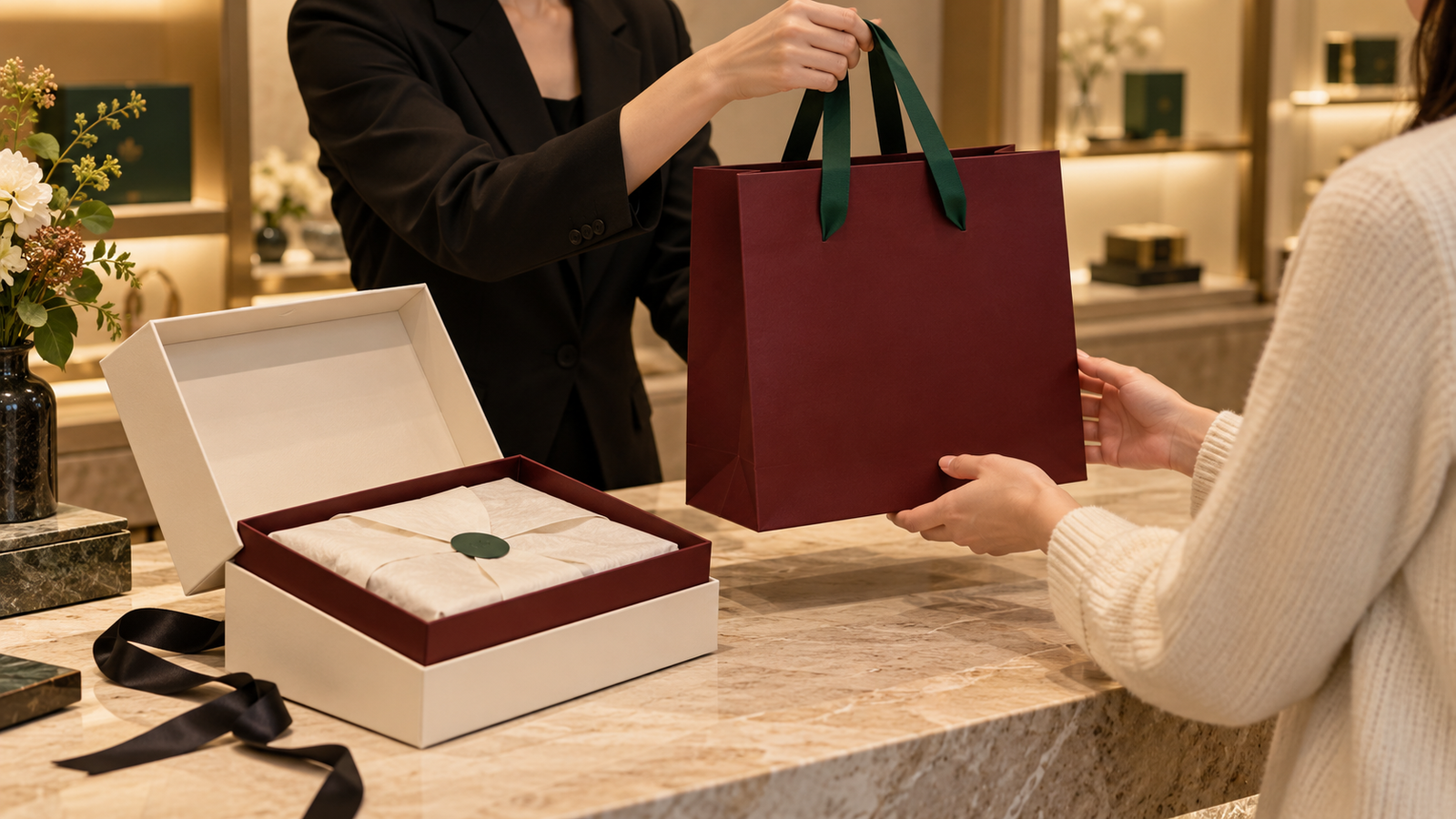
The rigid box presents and protects the product; the luxury paper shopping bag supports counter packing and customer carry. Measure the closed box with its tissue, ribbon and documents, then test the complete set in the bag. Base support, gusset opening, handles and top clearance should suit the packed box. The bag should not be treated as parcel protection, and the box should not be oversized merely to make the bag look fuller.
A restrained system often feels more deliberate than identical decoration on every layer. Repeat one colour, material cue or finish across the box, printed tissue, ribbon and paper bag, while allowing each component to perform its own job.
Frequently asked questions
Is a shoulder-neck box the same as a two-piece rigid box?
Not exactly. Both have a separate lid and base, but a shoulder-neck box adds a raised inner collar fixed inside the base. That collar guides the lid and can create a visible reveal band.
Does a shoulder-neck box need magnets?
No. The lift-off lid normally seats over the raised neck. If a project introduces magnets, ribbon ties or seals, they should be justified and tested as additions rather than assumed features of the structure.
How much of the neck should be visible?
There is no universal best reveal. Choose it from the visual hierarchy, lid guidance, bonding area and sample performance. Define the intended gap with a drawing and signed sample.
Can shoulder-neck boxes be shipped flat?
Conventional shoulder-neck rigid boxes are typically supplied assembled because the base, collar and wrapped-board lid keep their set-up form. If flat shipment is essential, compare collapsible rigid or folding-paperboard alternatives and assess the resulting appearance, assembly and performance.
Develop the box and retail carrier as one set
Share your product dimensions, packed weight, neck reveal, insert needs, artwork, quantity and delivery market. Bespoke Packaging can develop custom shoulder-neck rigid boxes and coordinate them with luxury paper bags, tissue paper and ribbon.