
LUXURY PAPER BAG FINISHING GUIDE
Luxury Paper Bag Finishes: Foil, Embossing or Spot UV?
Foil catches light, embossing adds relief, spot UV creates gloss contrast and lamination changes the whole surface. The best finish is the one that supports the brand, paper, artwork and real handling conditions.
The main luxury paper bag finishes are hot foil stamping, embossing or debossing, spot UV varnish, and full-surface matte, gloss or soft-touch lamination. Foil is the clearest choice for a reflective metallic accent. Embossing adds a raised tactile detail, while debossing presses the design inward. Spot UV places selective gloss over part of the artwork. Lamination changes the appearance and handling of the entire printed surface.
None of these processes is automatically “more luxurious” than the others. A small blind deboss on a rich uncoated paper can feel more considered than several effects competing on one bag. The right specification starts with the luxury paper bag material, artwork and intended use, then confirms the result on a production-relevant sample.
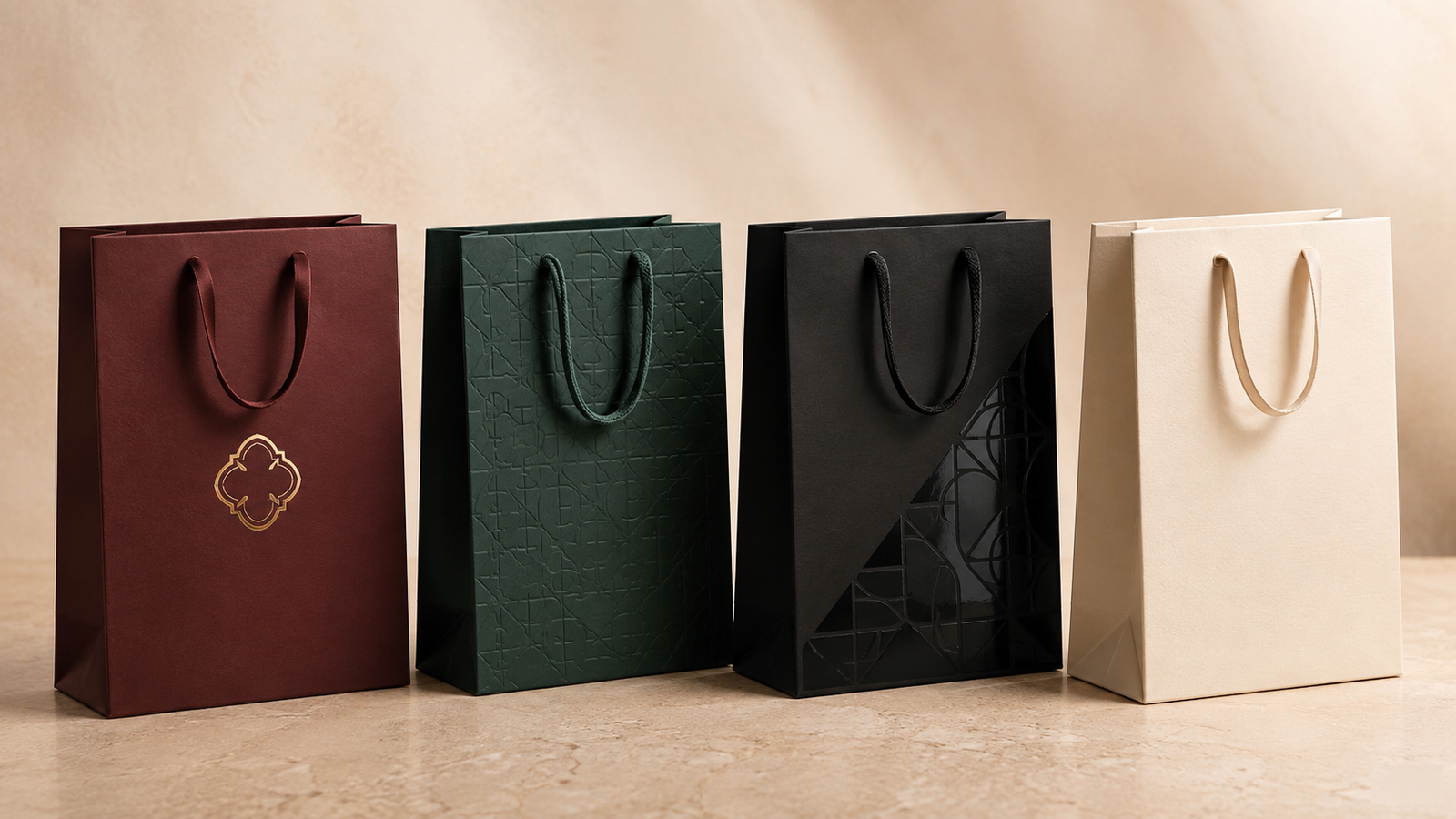
Which finish is best for a luxury paper bag?
Use the effect that solves the most important design or performance need:
- Choose foil stamping when a logo, border or small detail needs opaque metallic or pigment contrast.
- Choose embossing or debossing when touch, relief and understated branding matter more than shine.
- Choose spot UV when selective gloss should appear against a matte printed background.
- Choose matte lamination when the whole printed surface needs a low-glare, smooth and more protected appearance.
- Choose gloss lamination when brightness, saturation and a high-shine surface suit the brand.
- Choose a coating or unlaminated specialty paper when lower material complexity or the natural paper feel is central to the brief.
This first choice is only a direction. Paper texture, ink coverage, folds, bag construction, quantity, budget, production route and destination-market recovery systems can change what is practical. Ask the supplier to explain the proposed process stack rather than approving a finish name in isolation.
How do foil, embossing, spot UV and lamination compare?
| Finish | What it changes | Best starting use | Main approval point |
|---|---|---|---|
| Hot foil stamping | Reflective, metallic or pigmented accent | Logos, borders and restrained focal details | Coverage, edge definition, colour and registration |
| Embossing | Raises the paper surface | Tactile logos or patterns | Relief depth, paper response and fold clearance |
| Debossing | Presses the design inward | Quiet, dimensional branding | Depth, reverse-side effect and structural position |
| Spot UV | Adds selective clear gloss | Gloss-on-matte contrast | Registration, gloss level and rub performance |
| Matte or soft-touch lamination | Covers the full printed surface | Low-glare feel and handling protection | Scuffing, fingerprints, fold behaviour and film choice |
| Gloss lamination | Covers the full surface with shine | Bright colour and polished retail impact | Glare, scratching, edge appearance and brand fit |
These effects can be combined, but the combination should have a hierarchy. A matte base with one foil logo is easy to understand visually. A blind emboss on coloured paper lets the substrate lead. Spot UV can reveal a pattern only when light crosses the bag. Adding foil, embossing, gloss and texture to the same small area can reduce clarity and make sampling more complex.
What is hot foil stamping on a paper bag?
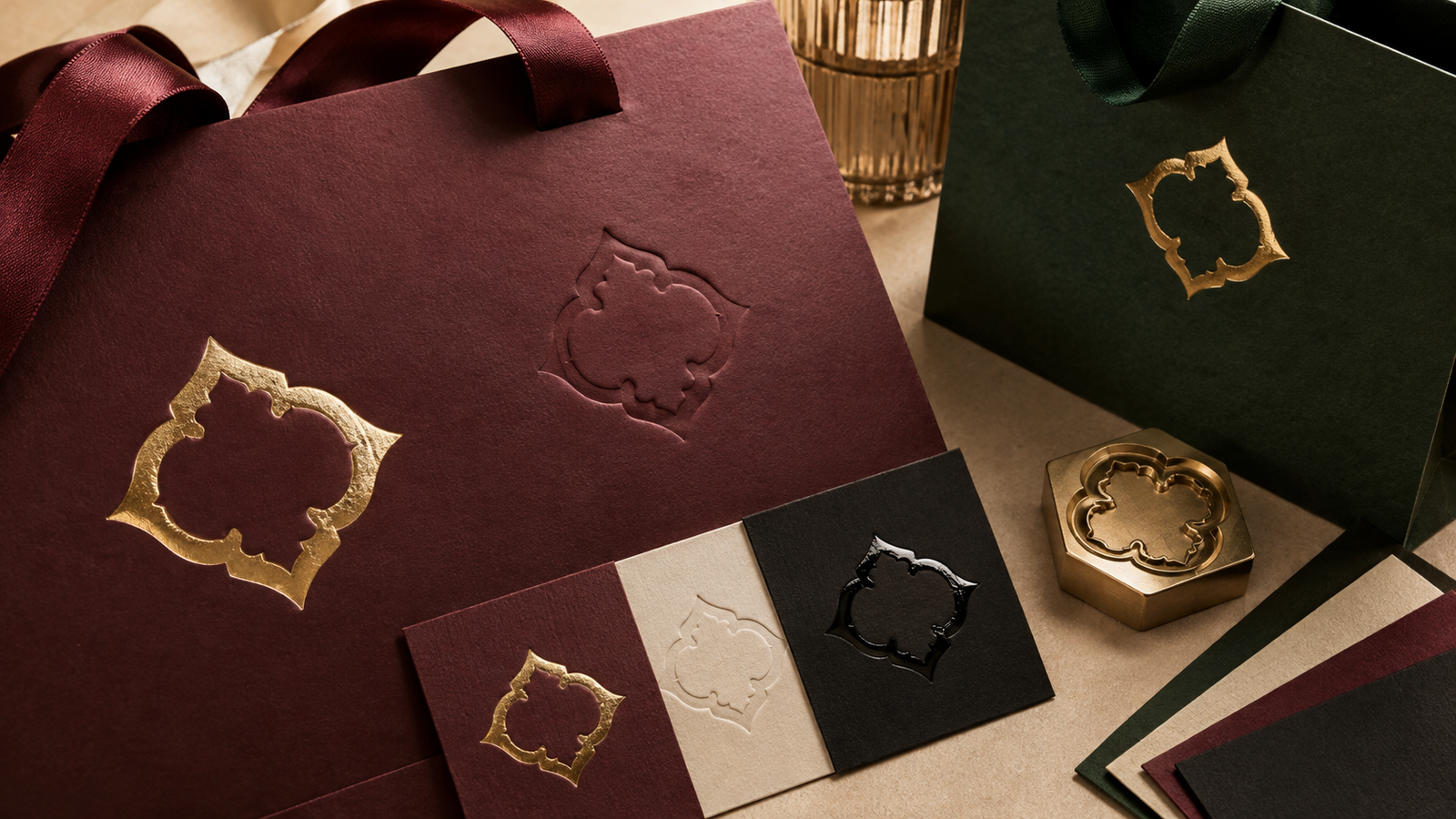
Hot foil stamping transfers a thin decorative layer to the paper using a heated die and pressure. It is commonly used for gold, silver, copper and coloured metallic details, but pigment and clear effects are also possible. Unlike a metallic ink, foil can create an opaque, light-reflective surface with a sharply defined edge when the paper, artwork and process are compatible.
Hot foil is different from cold foil. In its overview of the two processes, paper manufacturer Sappi explains that hot foil uses heat and an embossing die, while cold foil is applied with adhesive. Sappi also notes that cold foil generally asks more of surface smoothness, while a rougher paper can produce a more matte hot-foil contrast. For a paper shopping bag, the converter should recommend the method that suits the chosen sheet, artwork, run and equipment.
When does foil work well?
- a small logo needs strong contrast on dark or coloured paper;
- the brand uses a controlled metallic accent across bags and boxes;
- the artwork has clear shapes rather than fragile, crowded detail;
- the foil area can stay away from difficult folds, seams and high-abrasion edges;
- the project allows for a physical strike-off or finished sample.
Approve the actual foil colour under the lighting where the packaging will be seen. “Gold” can mean bright yellow, champagne, antique, matte or mirror-like tones. Also check large solid areas for pinholes or uneven contact, especially on pronounced paper textures. Fine lines and reversed details need enough space to remain clean after stamping.
What is the difference between embossing and debossing?
Embossing raises a selected design above the surrounding paper. Debossing presses it below the surface. Both use matched tools and pressure to reshape the sheet. A blind emboss or deboss uses no ink or foil, allowing light and shadow to reveal the artwork. A registered combination can align relief with a printed or foil-stamped element.
Relief works best when it is designed for the paper rather than copied directly from a screen graphic. The paper needs enough formability for the intended depth, and the design needs enough spacing to read cleanly. Deep impressions, very fine details and highly textured sheets can pull in different directions. The position also matters: keep important relief clear of creases, handle holes, reinforced turn-tops, gusset folds and side seams unless the converter has engineered for that interaction.
KURZ describes packaging surface finishing as a system that combines design, transfer material, tooling and process. That is a useful procurement principle: do not approve “embossed logo” as a generic line item. Approve the artwork, paper, tool, depth, position and finished appearance together.
What does spot UV do on a luxury shopping bag?
Spot UV is a clear varnish applied only to selected artwork and cured with ultraviolet light. It is used to create a glossy contrast, often over a matte printed or laminated background. The effect can be subtle face-on and become much more visible when the bag moves under light.
It works well for tonal logos, repeating patterns and details that should appear without adding another ink colour. It is less convincing when the design depends on a precise effect but registration has not been tested, or when the underlying surface does not produce enough contrast. Raised or high-build clear effects are different from a conventional flat spot varnish, so the expected height and gloss should be stated explicitly.
On a handled shopping bag, inspect spot UV where customers will touch and flex the surface. Check gloss consistency, registration, cracking near scores, rubbing during packing and whether adjacent bags stick or mark when stacked. A flat printed sheet may look correct before converting yet behave differently after folding and transport.
Should a luxury paper bag use matte, gloss or soft-touch lamination?
Lamination bonds a film over the printed paper. Matte film lowers glare and can create a smooth, restrained base for foil or spot UV. Gloss film increases reflectivity and can make printed colour appear more saturated. Soft-touch film is a matte option selected for its velvety hand-feel. The trade names and performance vary, so request the actual film specification and sample rather than relying on the adjective.
A film can help protect print during handling, but it does not make a paper bag waterproof or immune to scuffing. Dark matte surfaces may show rub marks, edge whitening, oil or fingerprints differently from gloss surfaces. Some soft-touch films mark more easily than others. Test the bag through packing, carton loading, transport simulation and repeated handling with the real artwork.
Lamination also changes the material construction. Industry recyclability guidance published by CEPI and summarized by Two Sides says coatings and laminates can provide useful functions but should be designed so they do not hamper the paper-recycling process. The 2026 4evergreen Circularity by Design Guideline assesses constituents and integrated components against relevant paper-recycling routes. Do not claim that every laminated bag is recyclable everywhere; confirm the complete construction and the collection, sorting and mill route in the destination market.
How does paper choice affect the finish?
The finish begins with the substrate. Smooth coated paper usually provides predictable ink detail and an even base for lamination or selective effects. Premium uncoated paper brings natural texture and can make blind embossing feel especially tactile. Coloured-through specialty paper can remove the need for a heavy printed background, while kraft creates a warmer, more fibrous foundation.
- Surface smoothness affects foil contact, gloss uniformity and edge definition.
- Paper texture can add character but may reduce the apparent sharpness of fine foil or printed detail.
- Paper shade changes the perceived colour of inks and the contrast around a clear varnish.
- Coating and absorbency affect how inks, adhesives and varnishes interact with the sheet.
- Caliper and formability influence relief, scoring and fold behaviour.
- Dark printed solids can reveal scuffing, cracking or edge wear that is less visible on light artwork.
Our luxury paper bag materials guide compares kraft, coated, uncoated, specialty and recycled papers in more detail. If colour is critical, also review how substrate and finish affect the print proof in the packaging colour guide.
How many finishes should one paper bag use?
For most premium bags, one dominant finish and one supporting effect are enough. A restrained system is easier to read, sample and repeat:
- Matte laminate plus a small foil logo: controlled contrast and a familiar polished retail look.
- Coloured uncoated paper plus blind deboss: quiet, tactile and material-led.
- Matte printed background plus spot UV pattern: tonal detail that appears as the bag moves.
- Natural kraft plus one pigment foil or opaque ink: direct material character with a clear focal mark.
- Foil aligned with shallow embossing: stronger dimension, but with tighter tooling and registration approval.
Ask what each effect contributes. If removing one finish does not weaken recognition, hierarchy, protection or use, it may not be necessary. Saving complexity in one area can create room for better paper, stronger construction, refined handles or a more representative sample.
What should you check on a finished sample?
A screen rendering can help choose a direction, but it cannot approve reflectivity, relief, texture or resistance to handling. Review the converted bag under practical conditions:
- Confirm the material stack. Record the paper, print, coating or film, foil, varnish and adhesives.
- Inspect the artwork. Check colour, opacity, registration, fine details and alignment between processes.
- Move the bag under light. Look for even foil, readable relief, consistent gloss and unwanted surface marks.
- Flex the structure. Inspect folds, gussets, the turn-top and seams for cracking, lifting or whitening.
- Pack the real product. Include the box, tissue, ribbon and accessories at the maximum approved configuration.
- Simulate handling. Carry, rub, stack and pack the sample as it will move through fulfilment and retail.
- Approve a reference. Keep the signed sample and written tolerances together for production comparison.
Start these checks early in the custom packaging order process. A finish may require dedicated tooling, extra passes, drying or curing, and additional quality-control points. Final cost and lead time depend on the approved artwork, area, colours, quantity, material and production route, so a supplier should quote the real specification rather than a generic “premium finish.”
How should finishes connect the bag, box, ribbon and tissue?
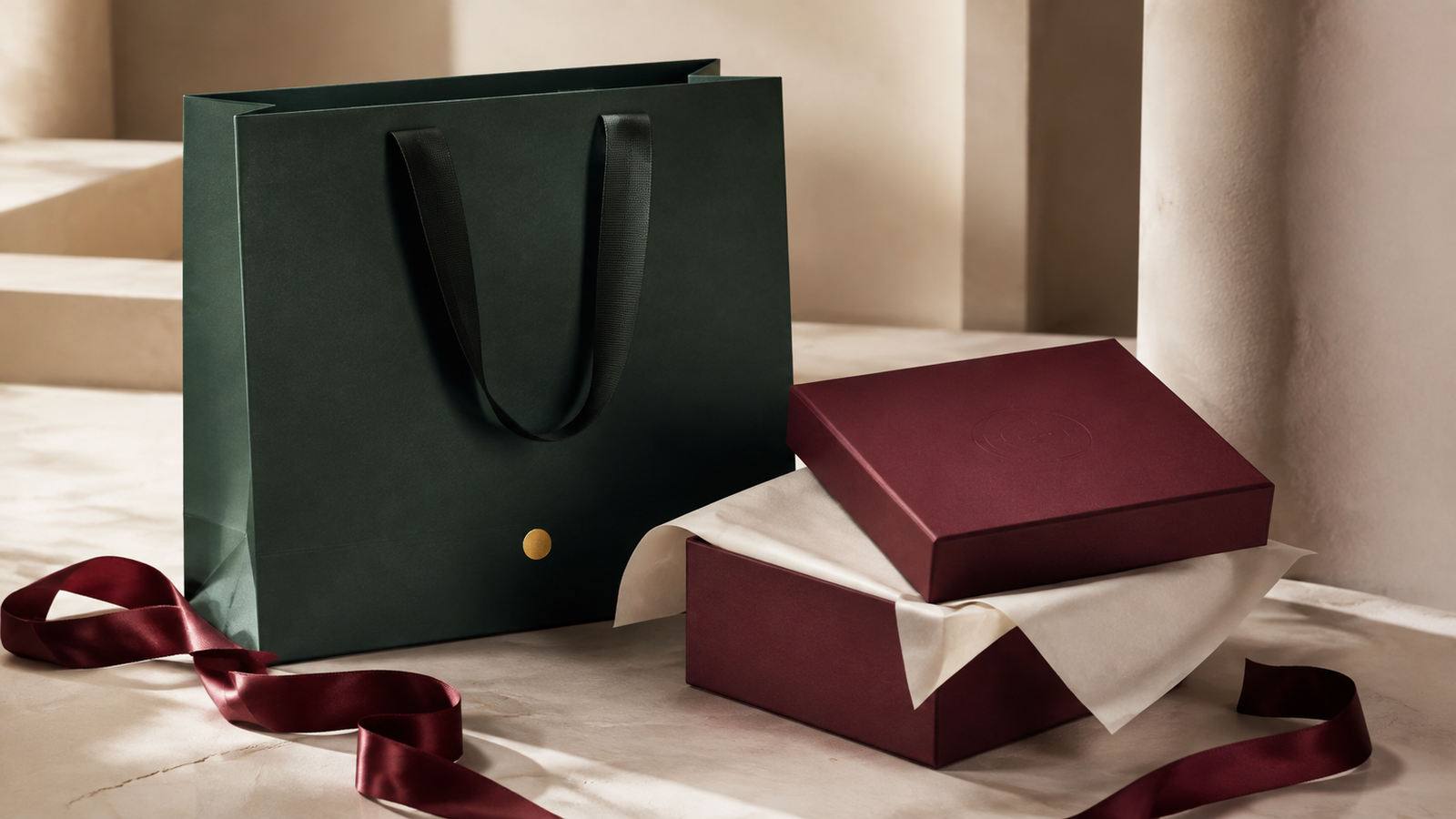
A coordinated packaging suite does not need the same finish on every component. Repeat one or two cues and let each material do the job it handles best. A green luxury bag can carry a small matte-gold foil mark, while a burgundy rigid gift box uses a blind deboss. Burgundy ribbon then repeats the colour, and cream tissue paper creates a softer interior layer.
This approach gives the customer a clear sequence: the bag creates recognition at a distance, the box adds structure, the ribbon introduces touch and the tissue controls the reveal. The finish becomes part of the brand experience rather than decoration applied independently to each item.
What belongs in a paper bag finishing brief?
- bag dimensions, quantity, delivery market and required date;
- product dimensions, maximum packed weight and packing method;
- approved or candidate paper, colour and texture;
- print process, ink colours, coverage and colour references;
- foil colour, gloss level, area and artwork layer;
- emboss or deboss artwork, depth direction and location;
- spot UV artwork, gloss expectation and whether a raised effect is required;
- lamination or coating type and required handling performance;
- handle type, reinforcement and nearby structural features;
- required fibre, recycled-content or end-of-life claims and supporting evidence;
- sample stages, testing conditions, tolerances and approval owners;
- matching gift box, ribbon and tissue-paper requirements.
Supply separate production artwork layers for print, foil, varnish and relief when requested. Identify whether the finish should align exactly with printed elements or sit independently. If the design direction is not final, share references for the desired level of shine, texture and restraint so the supplier can propose a compatible stack.
Frequently asked questions about luxury paper bag finishes
Is foil stamping better than metallic ink?
Foil usually creates a more opaque and reflective metallic effect, while metallic ink behaves like a printed ink and can appear more subtle. The better choice depends on the paper, artwork, desired reflectivity, run and budget. Compare physical samples under the intended lighting.
Can you emboss a paper bag without printing?
Yes. Blind embossing or debossing reshapes the paper without ink or foil. It can be effective on coloured or tactile papers, provided the paper, detail, depth and position are suitable for the bag construction.
Does spot UV need matte lamination?
Not in every production system, but spot UV is often specified over a matte base because the contrast makes the selective gloss easier to see. Confirm compatibility and the expected result with the printer on the chosen paper and coating stack.
Are laminated paper bags recyclable?
There is no universal answer. Film type, coverage, adhesives, handles and other components matter, and collection and recycling systems differ by market. Ask for evidence for the complete bag in the destination recovery route before making a recyclability claim.
What is the most understated luxury finish?
A blind deboss or emboss on a well-chosen uncoated or coloured paper is a strong starting point for understated branding. A small matte foil mark can also feel restrained. Proportion, placement and execution matter more than the finish name.
Choose the finish as part of the complete bag
Luxury paper bag finishes work when they reinforce a clear hierarchy and survive the real journey from production to the customer’s hand. Foil supplies reflective contrast, embossing and debossing create touch, spot UV adds selective gloss, and lamination changes the complete printed surface. The final choice should be tested with the approved paper, artwork, construction and packed product.
Bespoke Packaging develops custom paper shopping bags together with rigid gift boxes, ribbon and tissue paper. Share your artwork, bag size, quantity, delivery market and desired visual or tactile direction, and we can help compare finish options, plan samples and coordinate the full packaging set.
Should your paper bag catch the light, invite touch or let the paper itself do most of the talking?