
RECYCLABLE LUXURY PAPER BAGS
Are Luxury Paper Bags Recyclable? A Buyer’s Design Guide
Judge the whole bag—not only the paper—and turn a sustainability goal into a material, component and evidence brief a supplier can act on.
Many luxury paper bags can be designed for paper recycling, but the word “paper” is not enough to prove that the finished bag is recyclable. A buyer must review the body paper, coatings or lamination, inks, foil, handles, reinforcement boards, eyelets, adhesives and any labels as one construction. The answer also depends on whether the bag can be collected, sorted and processed in the destination market.
The most practical starting point is a fibre-led bag with only the materials needed for carrying performance and brand presentation. Prefer compatible or easily separable components, limit large non-paper surface coverage, confirm local collection rules and request test evidence when the structure is unusual. This guide turns that principle into a clear buying workflow for premium paper shopping bags. Use it when the procurement question is not only “which paper looks best?” but “what evidence supports the recyclability claim for the finished bag?”
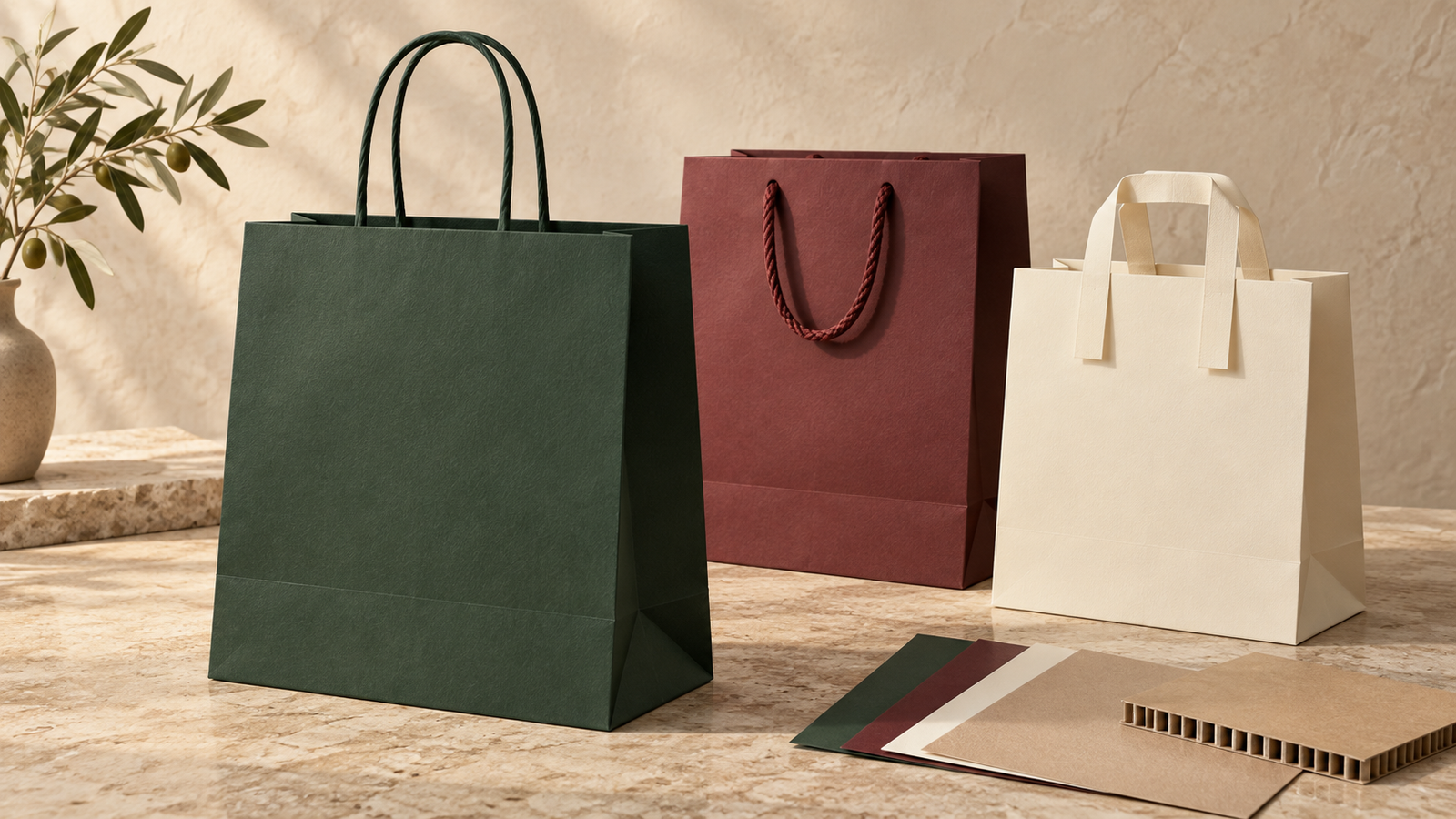
Are luxury paper bags recyclable?
They can be, but not automatically. Recyclability is a system question. The bag must contain recoverable fibre, be recognised and directed into the correct collection stream, release useful fibre in an appropriate paper mill and avoid creating unacceptable process or output-quality problems. A technically compatible construction can still miss recycling if local collection excludes it or a sorting system misidentifies it.
The 2026 4evergreen Circularity by Design Guideline distinguishes conventional, flotation-deinking and specialised paper-mill routes. It also warns that a negative result for one route does not prove that packaging is unrecyclable in every route. Buyers should therefore avoid blanket claims such as “all paper bags are recyclable” and ask which construction, test method and market the claim covers.
Which parts of a paper bag affect recyclability?
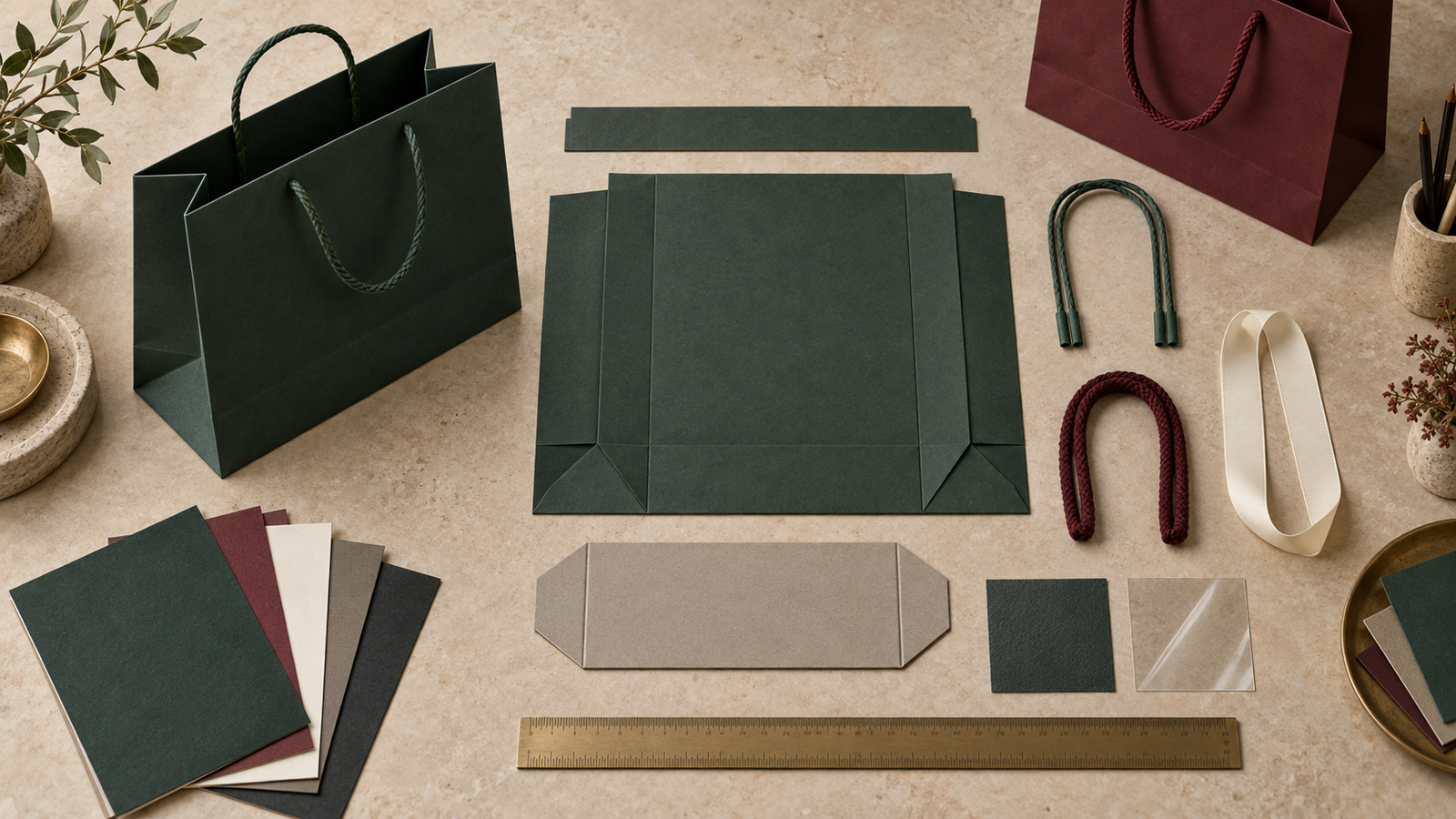
Start with a bill of materials for the finished bag. A simple material name on the quotation can hide several layers and components. For example, “art paper bag with rope handles” does not reveal whether the sheet is film-laminated, what the rope contains, whether metal eyelets are used or which reinforcement and adhesive systems sit inside the turn-top.
| Bag element | Question for the supplier | Why it matters |
|---|---|---|
| Body paper | What is the grade, grammage, fibre source and coating? | The paper supplies recoverable fibre but may also contain treatments that change pulping or sorting. |
| Surface layer | Is the bag unlaminated, varnished, dispersion-coated or film-laminated? | Type, chemistry, thickness and coverage affect fibre yield, rejects and possible sorting. |
| Printing and decoration | Which inks, varnishes, foil or metallic effects are used and over what area? | Large dark or metallic areas can affect optical sorting; some formulations require testing. |
| Handles and eyelets | Are they paper, cotton, polyester, polypropylene or metal, and can they be removed? | Integrated non-paper components add rejects and may change the appropriate recycling route. |
| Reinforcement and base | Are the turn-top patches and bottom board fibre-based? | Hidden components can add useful fibre or unnecessary material complexity. |
| Adhesives | Which adhesive family is used for seams, handle patches and lamination? | Adhesives behave differently in pulping and screening; an unfamiliar combination may need evidence. |
Does FSC certification prove that a bag is recyclable?
No. FSC and recyclability answer different questions. FSC chain of custody traces eligible forest-based material through the supply chain and controls how FSC claims are passed to a finished product. It does not, by itself, test how the complete printed, finished and handled bag behaves in a recycling process.
A bag can use FSC-certified paper and still contain a surface film, textile handles or other components that need separate recyclability assessment. Conversely, recycled fibre content is an input attribute, not proof that the finished bag will be collected and recycled after use. Put sourcing claims, recycled-content claims and end-of-life claims on separate lines in the specification, and require evidence for each.
Is an unlaminated paper bag always the best choice?
An unlaminated, fibre-led construction is often the simplest place to begin, especially when tactile paper and restrained print fit the brand. It is not automatically fit for every job. The bag still needs to survive conversion, packing, retail handling and the approved carrying load. A finish that reduces scuffing or moisture exposure may protect the bag’s function, but its chemistry and amount must be assessed rather than described only as “eco” or “water-based.”
4evergreen notes that polymer dispersion and solvent-based coatings can require testing because performance depends on the binder, fillers and amount used. Thick outer plastic coatings may also interfere with optical sorting. For a luxury shopping bag, compare these practical routes:
- Unlaminated coloured or printed paper: preserves a paper-led feel and avoids a full film layer, but rub, cracking and moisture response still need sample checks.
- Protective overprint varnish: can add handling resistance with less visual change than lamination; confirm the formulation and coverage.
- Dispersion coating: may provide a barrier or tactile effect, but the exact system and quantity matter and may require recyclability testing.
- Film lamination: can improve appearance and surface protection, yet adds a bonded non-paper layer and should not receive a generic recycling claim without construction-specific evidence.
Our luxury paper bag materials guide compares kraft, coated, uncoated, specialty and recycled papers, while the finishes guide covers lamination, varnish, foil and relief effects in more detail.
Do inks, black print and foil stop paper recycling?
Not as a universal rule. The formulation, coverage and recycling route matter. The 4evergreen guideline lists many common ink and varnish systems as compatible with conventional processes while calling for testing in particular cases. It also identifies large areas of carbon-black ink and extensive metallic surfaces as potential sorting disruptors because they can affect near-infrared detection.
Small hot-foil details are different from covering most of a bag with a metallised film. 4evergreen recommends minimising plastic and favouring hot stamping or cold transfer over metallised lamination where appropriate; it also advises against fully covering paper-based packaging with metallisation. For a premium result, one controlled foil mark on tactile paper can create clearer hierarchy than a fully reflective surface.
Map decoration on the supplier dieline and record approximate coverage, not only the process name. The paper bag artwork checklist explains how to separate print and finish layers for quoting and approval.
What should you do with handles, eyelets and reinforcement?
Choose the carrying system for the real load first, then simplify it without weakening the bag. A twisted-paper or folded-paper handle can support a fibre-led design. Cotton rope and ribbon can create a softer luxury hand-feel but introduce textile material. Polyester or polypropylene cord adds synthetic content. Metal eyelets add another material and are not necessary for every handle construction.
The 2026 4evergreen tables treat fibre-based carrying handles as the most compatible starting point for conventional paper recycling and place polyolefin, PET and metal handles in more limited categories. That does not mean a paper handle is automatically strong enough or a textile handle makes every bag unrecyclable. It means the complete construction needs a deliberate choice, with performance testing and destination-market guidance.
- Use fibre-based turn-top and base reinforcement where it meets performance needs.
- Avoid decorative eyelets when they add no useful structural benefit.
- If a non-paper handle is needed, ask whether it can be removed easily and how the consumer should separate it.
- Keep handle composition and attachment method in the approved bill of materials.
- Test the entire load path from handle through reinforcement, panels, seams and base with the real packed product.
See the luxury paper bag handle guide for a practical comparison of paper, rope and ribbon choices.
Is reuse the same as recyclability?
No. Reuse describes another use cycle; recyclability describes the route into material recovery after use. A well-proportioned, attractive bag may be reused by a customer, but a brand should not promise a fixed number of uses without a defined design, test and usage scenario. Adding material solely to make an unverified “reusable” claim can also work against weight reduction and fibre recovery.
Design first for the required retail journey: load, carrying time, weather exposure, presentation and storage. Then test whether the selected bag can support the intended reuse scenario. Finally, document its end-of-life route. Durability and recyclability can support one another, but neither should be inferred from a heavy paper weight alone.
How do you design a recyclable luxury paper bag?
- Define the destination markets. Record where the bags will become waste and check the relevant collection and labelling rules.
- Build the real use case. State the largest finished product pack, maximum weight, carrying method and expected exposure.
- Start with a fibre-led construction. Choose body paper, turn-top and base reinforcement that meet the function without unnecessary layers.
- Select the handle as part of the load path. Compare paper, cotton, ribbon and synthetic options by strength, comfort, separability and recovery route.
- Use decoration selectively. Limit full-surface film and metallisation unless performance requires them and evidence supports the design.
- List every material and adhesive. Include hidden patches, films, eyelets, cords, labels and glue systems.
- Check collection, sorting and mill compatibility. A pulping result alone does not prove that local systems will accept and route the bag.
- Test unfamiliar combinations. Use a recognised laboratory method and the relevant evaluation protocol rather than supplier adjectives.
- Approve claims and instructions. Keep sourcing, recycled content, reuse and recyclability statements distinct and market-specific.
- Lock the production reference. Retain the signed specification, artwork, sample, evidence and change-control process.
What evidence should a supplier provide?
Ask for evidence proportionate to the risk and claim. A conventional paper-led bag may be assessed against established design guidance, while a novel coating, high non-paper content or unusual material combination may justify laboratory testing. Cepi’s Recyclability Laboratory Test Method Version 3 emulates pulping, screening and sheet formation in a conventional paper mill. Cepi explains that its results can be used with the relevant 4evergreen evaluation protocol.
- a component-level bill of materials with weights or percentages where relevant;
- technical data for the paper, coating, laminate, ink, varnish, foil, handle, reinforcement and adhesive;
- the named design-for-recycling guideline and version used for the assessment;
- laboratory report, sample identification and evaluation protocol when testing is required;
- the countries, collection streams and conditions covered by any recyclability claim;
- approved consumer separation or disposal instructions, including what to do with non-paper handles;
- change control requiring reassessment if a supplier substitutes paper, film, adhesive, cord or finish.
Do not accept one generic certificate for a family of visibly different bags unless the scope clearly covers every construction. Match the report to the production-intent sample, artwork coverage and bill of materials.
What does the EU PPWR change for paper bags?
The EU Packaging and Packaging Waste Regulation, Regulation (EU) 2025/40, now matters to brands placing packaging on the EU market. The European Commission confirmed that the rules began applying on a phased basis from 12 August 2026. It also states that the requirement for all packaging to be recyclable applies from 2030, with supporting secondary legislation still being developed.
This is not a reason to print a broad compliance statement today. It is a reason to capture the full bag construction now, reduce unnecessary material, retain supplier evidence and monitor the delegated rules, labelling requirements and national implementation that apply to each market and date. Our existing EU packaging rules guide for small brands provides a wider introduction, but legal responsibilities should be checked for the specific economic operator and sales market.
How should recyclability be approved during sampling?
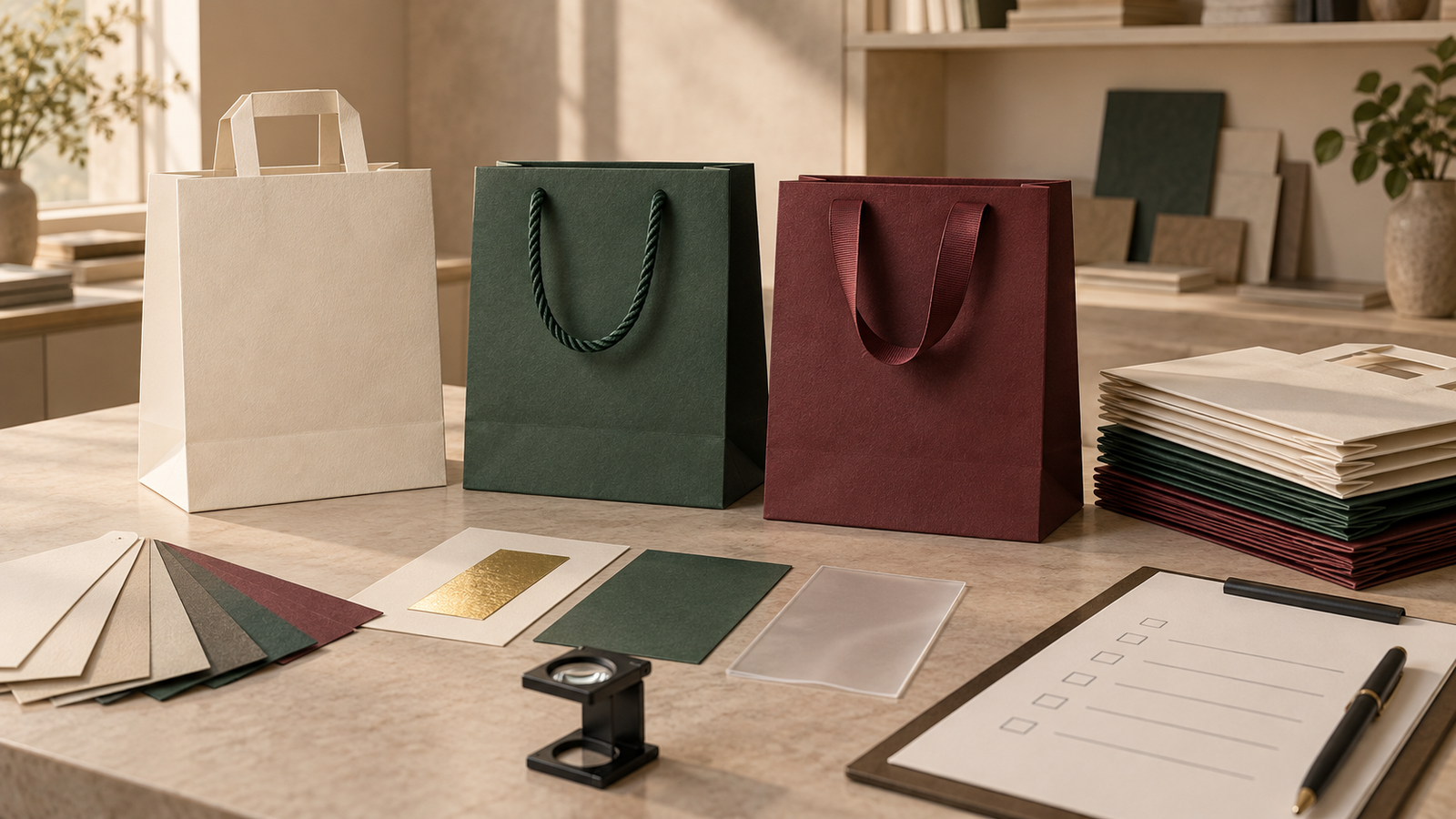
Approve appearance, performance and recovery evidence together. A material swatch can show colour and texture but not the final amount of adhesive, handle composition or decoration coverage. A handmade sample can show the design while using temporary materials. The production-intent sample should therefore be tied to the same bill of materials and artwork coverage used in the recyclability assessment.
- Compare the unprinted paper, printed sheet and converted bag.
- Confirm the exact handle material, reinforcement, eyelets and attachment method.
- Record coating or laminate supplier, chemistry, thickness and coverage where relevant.
- Check foil and dark-print areas against the final artwork, not a small demonstration swatch.
- Load and carry the bag with the approved product configuration.
- Verify that consumer separation instructions are realistic on the finished bag.
- Retain one identified master sample and the supporting evidence after approval.
The custom paper bag sample guide explains how swatches, structural prototypes, print proofs, finish trials and pre-production bags answer different approval questions. Use the quality-control checklist to carry the approved construction into bulk production and final inspection.
What belongs in a quote-ready recyclability brief?
- Destination countries and intended collection stream.
- Finished bag width, gusset and height, maximum packed weight and product configuration.
- Body paper grade, grammage, colour, coating and fibre-source claim.
- Turn-top and base reinforcement materials.
- Handle composition, dimensions, attachment, eyelets and separability requirement.
- Printing method, ink system, varnish, foil and approximate surface coverage.
- Any film, dispersion coating or barrier by chemistry, thickness and coverage.
- Adhesives used for seams, patches, handles and lamination.
- Target recyclability claim, applicable market and required evidence or test protocol.
- Sample stages, approval owner, change control, carton packing, quantity and delivery date.
Send the same brief to every bidder. A quotation for an unlaminated paper-handle bag is not comparable with one for a film-laminated rope-handle bag, even when the finished dimensions and logo look similar.
Frequently asked questions about recyclable luxury paper bags
Can a laminated luxury paper bag be recycled?
Sometimes, but the answer depends on the film or coating, its amount, how it is bonded, the total construction and the available collection and mill route. Do not infer recyclability from a film being thin, clear, “bio-based” or water-resistant. Ask for construction-specific evidence.
Should customers remove rope or ribbon handles?
If the destination recycling guidance asks consumers to separate non-paper handles, design the attachment so removal is practical and provide clear instructions. Do not rely on consumers dismantling a tightly integrated construction unless the behaviour has been considered in the collection and sorting assessment.
Are recycled paper bags automatically recyclable?
No. Recycled content describes the input fibre. Recyclability describes what can happen to the finished bag after use. Coatings, handles, adhesives, decoration, contamination and local infrastructure still affect the outcome.
Is foil stamping compatible with paper recycling?
Restrained hot or cold transfer decoration can be compatible with paper-recycling design guidance. Extensive metallised film or near-total metallic coverage creates a different sorting and material scenario. Specify the process and coverage, then assess the complete bag.
What is the fastest way to simplify a luxury paper bag?
Begin with an unlaminated paper-led body, fibre-based reinforcement and a paper handle, then add only the print or finish needed for the brand and real handling conditions. Test the resulting bag with the actual product rather than assuming the simplest flat material will make a strong finished carrier.
Make the evidence as considered as the bag
A recyclable luxury paper bag is not created by replacing one adjective with another. It comes from a visible chain of decisions: the correct load case, a fibre-led construction, deliberate handles and finishes, a complete bill of materials, market-specific collection guidance and evidence matched to the production sample.
Bespoke Packaging develops custom luxury paper bags together with rigid gift boxes, tissue paper and ribbon. Share your product dimensions, quantity, destination markets, artwork and sustainability requirements, and we can help turn them into a sample-ready paper bag and coordinated packaging brief.
Can your supplier explain how every layer and component affects the recovery route?