
CUSTOM BLACK PAPER BAGS
Custom Black Paper Bags With Logo: A Buyer’s Guide
Choose the black surface, logo process, handles and approval checks as one specification—so the finished bag looks intentional in store and remains practical in production.
Custom black paper bags with a logo can be made from black paper, printed black on a lighter sheet, or finished with a black film or coating. These routes can look similar in a photograph, but they behave differently at cut edges, folds, scuffed areas and under printed decoration. A reliable specification starts with the intended appearance and retail use, then fixes the complete construction on a physical sample.
This buyer’s guide compares the main ways to create a black luxury paper bag, explains how white ink, foil and debossing work on a dark surface, and shows what to inspect before mass production. It is for fashion, jewellery, beauty, hospitality and gift brands that want a premium black carrier without treating colour as the only decision.
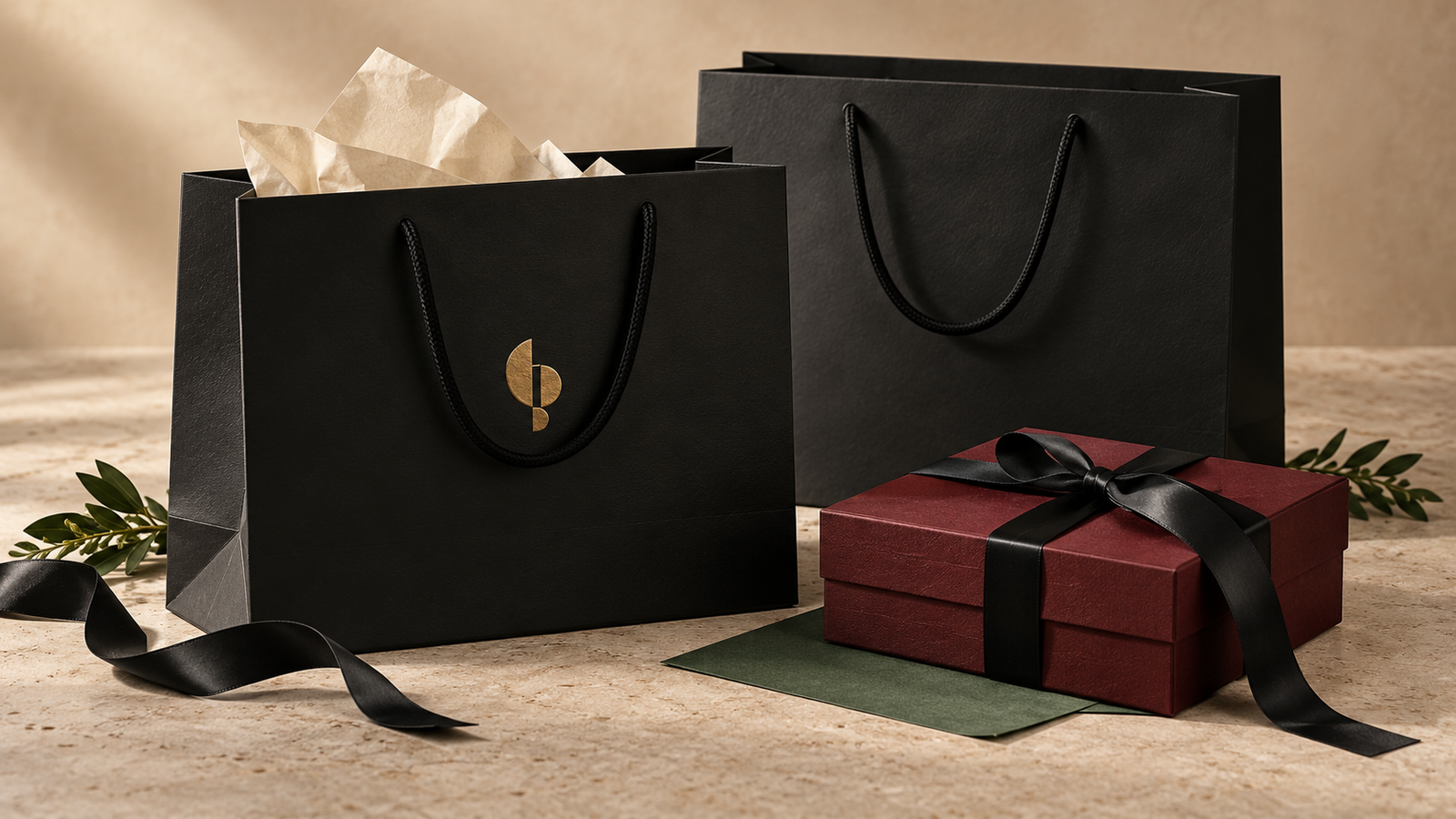
What is a custom black paper bag?
A custom black paper bag is a made-to-order paper shopping bag whose visible exterior is predominantly black. The colour may come from the fibre sheet itself, from ink applied to another paper, or from a surface layer. Size, paper, turned top, gussets, base board, handle reinforcement and handle material still determine how the bag carries the product.
“Matte black” is not a complete material description. It can refer to an uncoated dyed paper, a matte ink on coated stock, or a film-laminated surface. Ask the supplier to name the paper and surface route, show the cut edge and fold, and provide the exact sample that production will follow.
Which black surface route should you choose?
| Black surface route | Visual character | Useful when | Approval focus |
|---|---|---|---|
| Mass-dyed or through-coloured black paper | Natural uncoated grain; cut edges remain dark | The brand wants a tactile, material-led black with restrained decoration | Shade, sheet consistency, fold behaviour, rub marks and logo opacity |
| Black ink printed on white or light paper | Controlled printed solid; inner surface can remain light or be printed separately | Artwork needs a precise printed field, pattern or different interior | Solid density, white edges, cracking, set-off, rub resistance and colour consistency |
| Black lamination or coated finish | Even matte, gloss or soft-touch appearance | A particular surface feel or protection level is required and justified | Scuffing, fingerprints, delamination, fold whitening, recyclability evidence and handling |
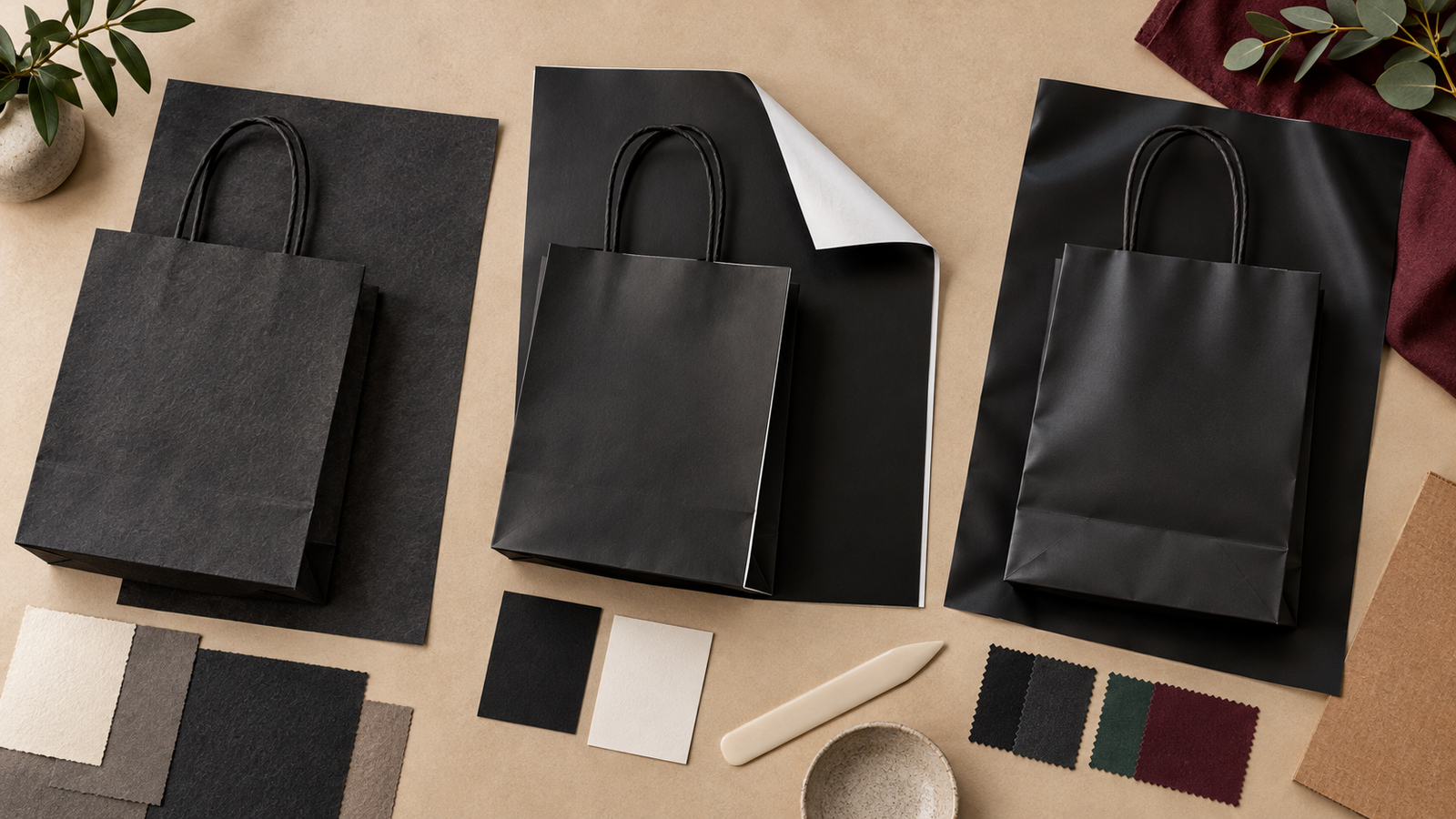
Mass-dyed black paper
In a mass-dyed sheet, the fibre furnish is coloured rather than receiving black only as a surface print. That can keep cut edges visually dark and gives an uncoated, tactile result. Fedrigoni’s current Sirio Color range is one documented example of pulp-coloured paper and board offered in black. A named range is still only a starting point: the bag converter must confirm whether the selected weight and construction suit the finished size, load and folding process.
Printed black
Printing a black solid provides flexibility for inside/outside artwork and can make sense when the bag already uses a coated white sheet. However, the light base may become visible at cut edges or stressed folds. Large solids can also reveal variation, set-off or abrasion more readily than small graphics. Review a converted production-intent sample, not only a digital proof or isolated press sheet.
Laminated or coated black
A surface layer can create a very even matte, gloss or soft-touch effect, but it adds another material and another interface to test. Confirm the exact film or coating, adhesion at folds and turned edges, resistance to fingerprints and scuffs, and the recycling route in the destination market. Do not use “recyclable” as a generic finish description without evidence for the complete bag construction.
How should a logo be printed on a black paper bag?
Opaque white ink
White ink can create a clean, modern contrast, but one pass is not automatically opaque on a deep black stock. Ink system, screen or plate, deposit, curing and paper absorption all affect the result. ISO 23498:2022 specifies a way to measure the visual opacity of printed white ink on coloured opaque substrates. Buyers do not need to prescribe a laboratory method for every order, but they should approve the actual white-on-black sample and define the accepted appearance.
Hot foil
Gold, silver or coloured foil gives strong contrast without asking the black sheet to reproduce a light ink. Fine lines, broad solids, folds and textured papers need different artwork judgement. Confirm foil grade, die detail, registration, adhesion and acceptable pinholes or edge character on the chosen paper. Our foil-stamped paper bag guide covers the process in more detail.
Debossing or embossing
A blind deboss or emboss uses light and shadow rather than colour. It can suit understated branding, but very low contrast may reduce legibility and a deep impression can stress some papers. Approve depth, edge definition, reverse-side show-through and placement away from folds, handle holes and reinforcement areas.
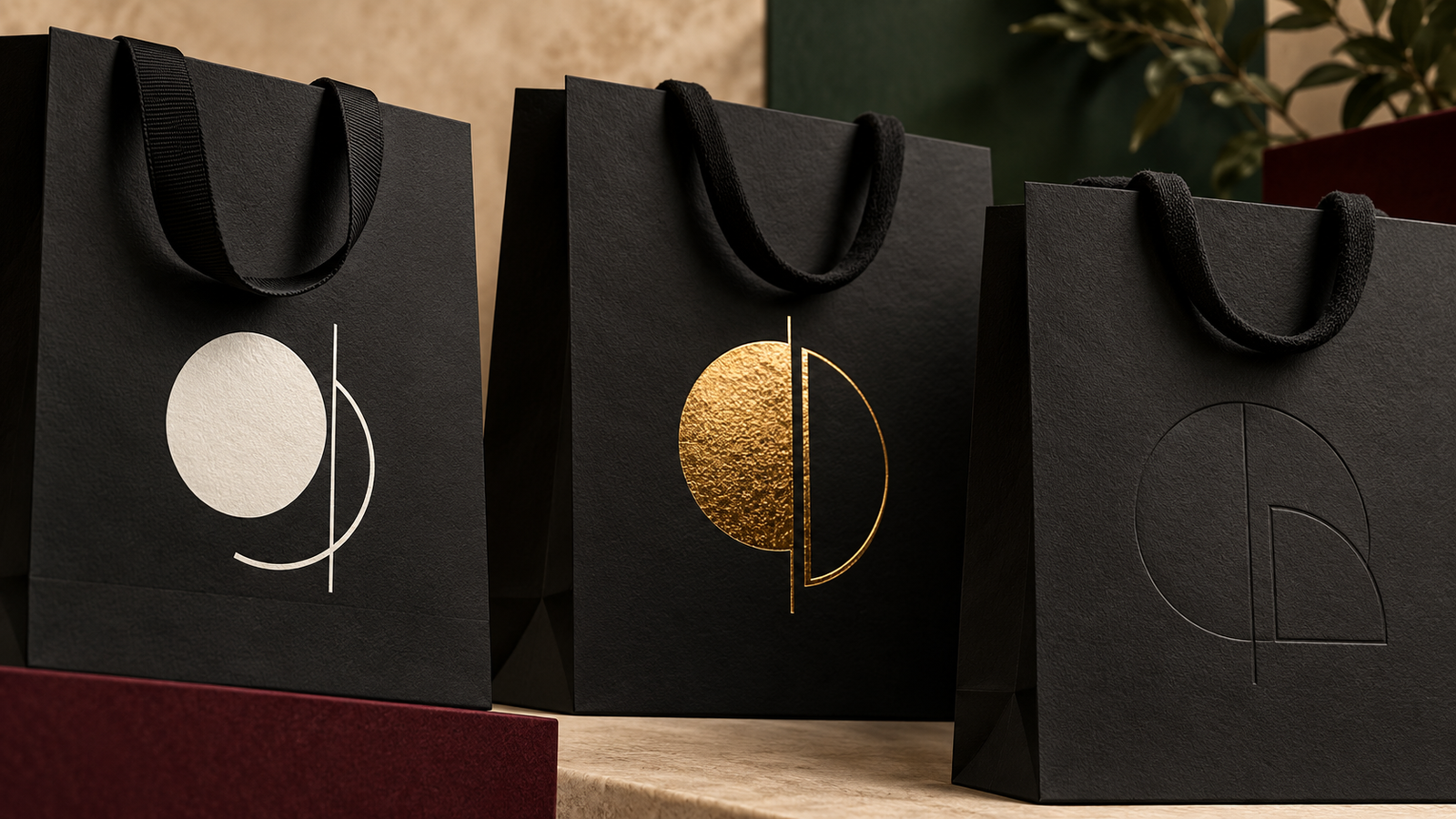
Artwork files should separate print, white ink, foil and relief layers clearly. Use the supplier’s approved dieline and check every panel, safe area, bleed and finish position before tooling. See our paper bag artwork guide for the handoff checklist.
Why does the same black look different on different papers?
Paper colour, texture, absorbency and coating change the way ink and reflected light behave. Pantone’s explanation of coated and uncoated colour references notes that the same ink colour can appear different because it interacts differently with each stock. A screen value or colour name therefore cannot replace a physical reference on the intended paper.
- Name the target: define whether “black” means a named paper, a printed reference, a measured target or an approved sample.
- Approve under agreed light: compare samples in consistent viewing conditions and include the actual logo finish.
- Keep one controlled standard: identify the signed sample or production reference used for future inspection.
- Set a practical expectation: paper is a manufactured material, so agree how variation will be judged rather than relying on words such as “deep” or “premium.”
How can scuffing, rub-off and fold whitening be controlled?
Treat appearance durability as a use-case test
A black bag can pass a static visual review yet mark during conversion, carton packing, store storage or customer carrying. Use the real paper, print, finish and construction; then simulate the contacts that matter to your route.
- Inspect folded gussets, base creases, turned tops, handle holes and carton contact points.
- Rub finished surfaces face-to-face and against tissue, ribbon, boxes and shipping dividers used in the approved pack.
- Check whether black transfers to pale products, tissue or clothing.
- Look for gloss change, polishing, fingerprints, foil abrasion, edge chipping and visible white fibres.
- Repeat the check after normal packing, transport simulation and unpacking.
ASTM D5264-98(2019) describes an abrasion-resistance test for printed packaging materials using a Sutherland rub tester. The correct test conditions and acceptance criteria still need to be agreed for the actual job. A laboratory result should support—not replace—inspection of the converted bag under its intended handling conditions.
What construction and handles suit a black luxury bag?
Black colour does not carry the load. Confirm the product dimensions and packed weight first, then specify the paper, side seam, gussets, base board, turned top and handle reinforcement as one load path. A compact jewellery bag and a large apparel carrier may share a black visual identity but require different structures.
Black-on-black
Black cotton rope or ribbon handles keep the presentation quiet and allow paper texture or a small logo to lead. Compare the handle under the same light as the bag: two materials both called black can have noticeably different undertones and sheen.
Controlled contrast
Burgundy, cream or deep green handles can connect the bag to a rigid box, printed tissue paper or custom ribbon. Limit the number of accents and approve the full set together so the colour hierarchy remains deliberate.
For handle comfort, attachment and reinforcement choices, use the luxury paper bag handles guide. For the complete load path, see the paper bag construction guide.
What should the physical sample prove?

Appearance checks
- Black shade, texture and sheen under agreed light
- Cut edges, creases and corner fold appearance
- White ink opacity, foil coverage or relief depth
- Logo position and panel alignment
- Scuffs, rub-off, fingerprints and glue marks
Functional checks
- Finished size and fit around the complete product pack
- Handle length, comfort and attachment security
- Base, gusset and top reinforcement under the intended load
- Counter packing and product removal
- Carton packing, transport protection and receiving condition
Keep a controlled approval sample and a written specification. Our paper bag samples guide explains what swatches, print proofs, finish strike-offs and fully converted samples can—and cannot—prove. Bulk inspection should use the same references and agreed defect language.
How should sustainability and regulatory claims be handled?
Evaluate the complete bag: body paper, ink, foil, coating or film, adhesive, reinforcement, handles and any accessories. The 4evergreen Circularity by Design Guideline, Version 4 provides current European design guidance for paper-based packaging and stresses that final designs still need appropriate evaluation. A black appearance by itself does not prove or disprove recyclability.
For packaging placed on the EU market, the European Commission states that the Packaging and Packaging Waste Regulation started to apply on 12 August 2026, with measures phased according to the regulation. Confirm the obligations and substantiation that apply to the brand’s role, market and launch date. Keep fibre sourcing claims, recycled-content claims and recyclability claims separate in the brief and evidence file.
What belongs in a quote request for custom black paper bags?
- Finished product and gift-box dimensions, packed weight and carrying orientation
- Required bag sizes, quantities by size or artwork and destination markets
- Black route: named mass-dyed paper, printed solid, coating or lamination
- Paper grade, grammage, texture and inside colour
- Logo process, colours, finish layers and supplied artwork files
- Handle material, colour, length and attachment method
- Turned top, reinforcement, base board, gusset and seam construction
- Appearance references, rub or handling checks and inspection criteria
- Sample stages, approval owners and controlled production standard
- Sourcing, recyclability, regulatory and labelling evidence required
- Carton packing, delivery destination, need-on-site date and coordinated box, tissue or ribbon
Share the same brief with every supplier so quotations describe comparable constructions. If one quote says only “matte black luxury bag,” ask what paper, surface process, reinforcement, handle and approval route are included before comparing price.
Frequently asked questions
Is black paper better than printing a paper bag black?
Neither route is automatically better. Mass-dyed paper can keep edges dark and provide a tactile uncoated look. Printed black can support more complex exterior and interior artwork. Choose from the required appearance, construction, quantity, decoration and evidence, then approve the converted sample.
Can a white logo be printed on a black paper bag?
Yes, but the result depends on ink opacity, deposit, paper texture and the print process. Approve the actual white ink on the selected black paper. If very high contrast or fine detail is required, compare white ink with foil and other suitable processes.
Do matte black paper bags always show fingerprints?
Not always. Fingerprint visibility varies with the paper or surface layer, sheen, handling and lighting. Include clean-hand and normal store-handling checks in sample approval instead of relying on the word “matte.”
Are black paper bags recyclable?
Colour alone is not enough to answer. Assess the complete construction and the collection, sorting and recycling route in the destination market. Ask for current evidence covering the paper, ink, coatings or films, adhesives, reinforcement and handles.
Specify a black paper bag that works beyond the mockup
Share your product size, packed weight, quantity, artwork, preferred black finish and delivery market. Bespoke Packaging can develop luxury paper bags with coordinated gift boxes, tissue paper and ribbon.