
REUSABLE LUXURY PAPER BAGS
Reusable Paper Bags: A Buyer’s Guide for Luxury Retail
Learn when “reusable” is a design goal, when it is a formal packaging claim, and how to specify a premium paper bag that can survive the intended repeat-use journey.
Reusable paper bags need more than thick paper and a premium appearance. The buyer must define the intended repeated use, engineer the complete load path, test a converted bag with a realistic load and keep evidence for any claim. A customer may reuse an ordinary retail bag, but that behaviour alone does not automatically make the packaging “reusable” under a standard or regulation.
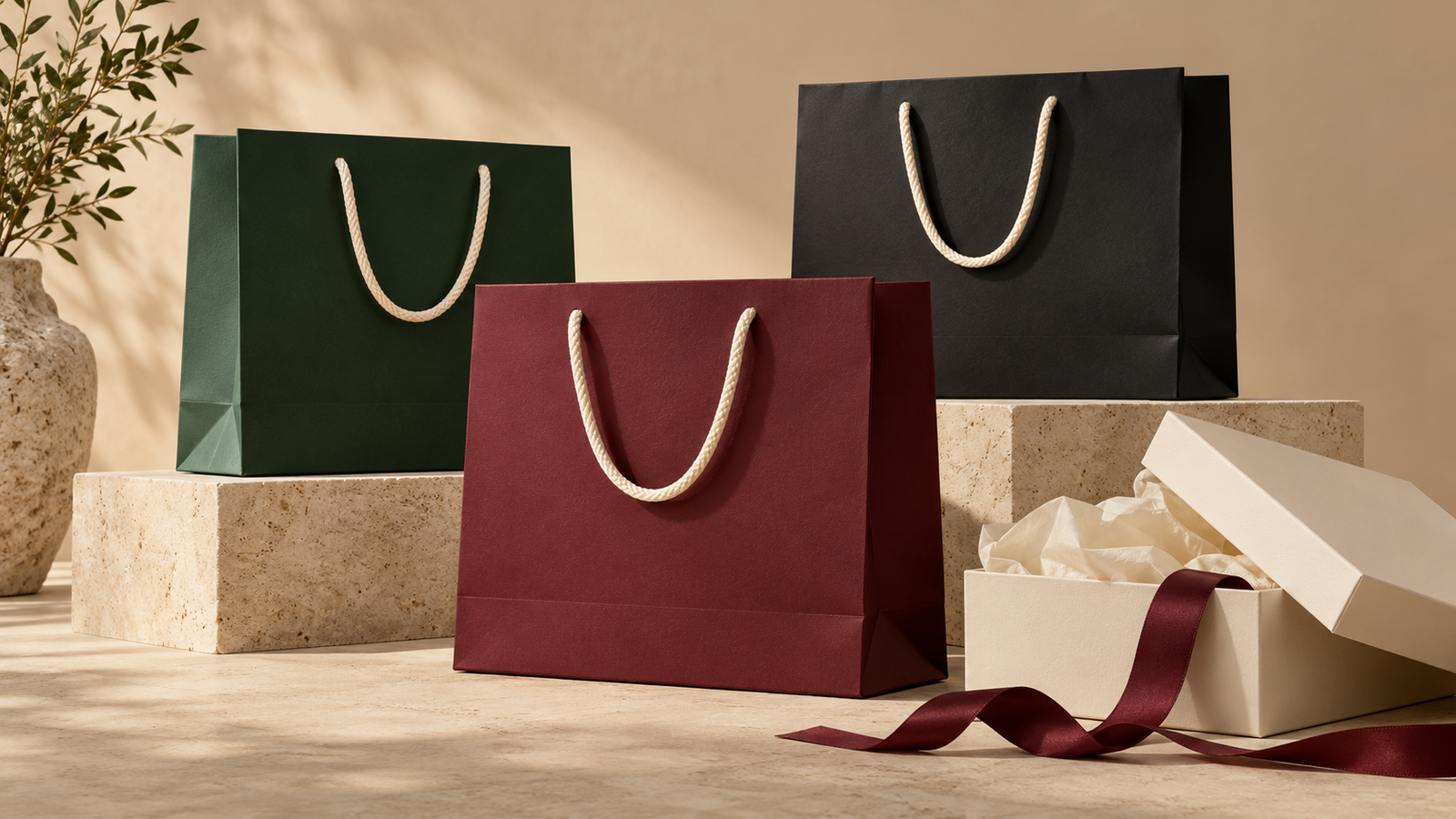
What is a reusable paper bag?
In everyday language, it is a paper carrier that a customer keeps and uses again. In a formal packaging context, the meaning is narrower. ISO 18603:2013, confirmed as current in 2024, sets requirements and assessment procedures for packaging to be classified as reusable, including the associated reuse system.
The practical buyer answer
First decide whether the objective is a durable luxury carrier that customers are likely to keep, or packaging that must satisfy a defined reusable-packaging claim. Both can be worthwhile, but the second needs an intended number of rotations, a real system that enables reuse, appropriate testing and documented substantiation.
Which reuse goal are you actually buying?
| Goal | What it means for the brief | Evidence to plan |
|---|---|---|
| Premium one-way retail handoff | The bag must protect and carry the product through its first journey. Later customer reuse is welcome but not promised. | Fit, carrying performance, appearance, production quality and end-of-life information. |
| Designed for repeated personal use | The brand defines realistic second-use scenarios and makes the bag durable enough for those scenarios without claiming a formal return system. | Repeated loaded handling, opening, folding, abrasion and storage checks against an approved sample. |
| Reusable packaging in a formal system | The packaging is intended for repeated use for the same purpose and is supported by arrangements that make those rotations possible. | Applicable legal criteria, system description, rotation target, reconditioning process, test results, records and user instructions. |
Do not let a quotation use these goals interchangeably. A strong bag is not automatically part of a reuse system, and a reuse message is not evidence that the bag will survive the proposed route.
How do you write a useful repeat-use brief?
Start with the journey, not a generic request for “extra strong” paper. Record the following before the supplier recommends a structure:
- Original use: list the actual product, any rigid gift box, tissue, ribbon and the complete packed weight.
- Intended later use: describe what the bag should carry, where it will travel and how it will be loaded.
- Repeat-use target: define the number of cycles the project intends to support instead of using “many times.”
- Handling conditions: include carrying time, opening and closing, counter packing, vehicle travel, storage, humidity exposure and likely surface contact.
- Failure criteria: state what counts as unacceptable, such as a detached handle, torn hole, open seam, collapsed base or logo damage.
- Claim and market: identify the exact wording, destination countries and party responsible for substantiation.
A fashion boutique may want a beautiful bag customers keep for accessories. A hotel gift shop may want a bag that returns between a room and the spa. A closed-loop event program may collect and redistribute carriers. Those are different journeys, so they should not share an unqualified durability target.
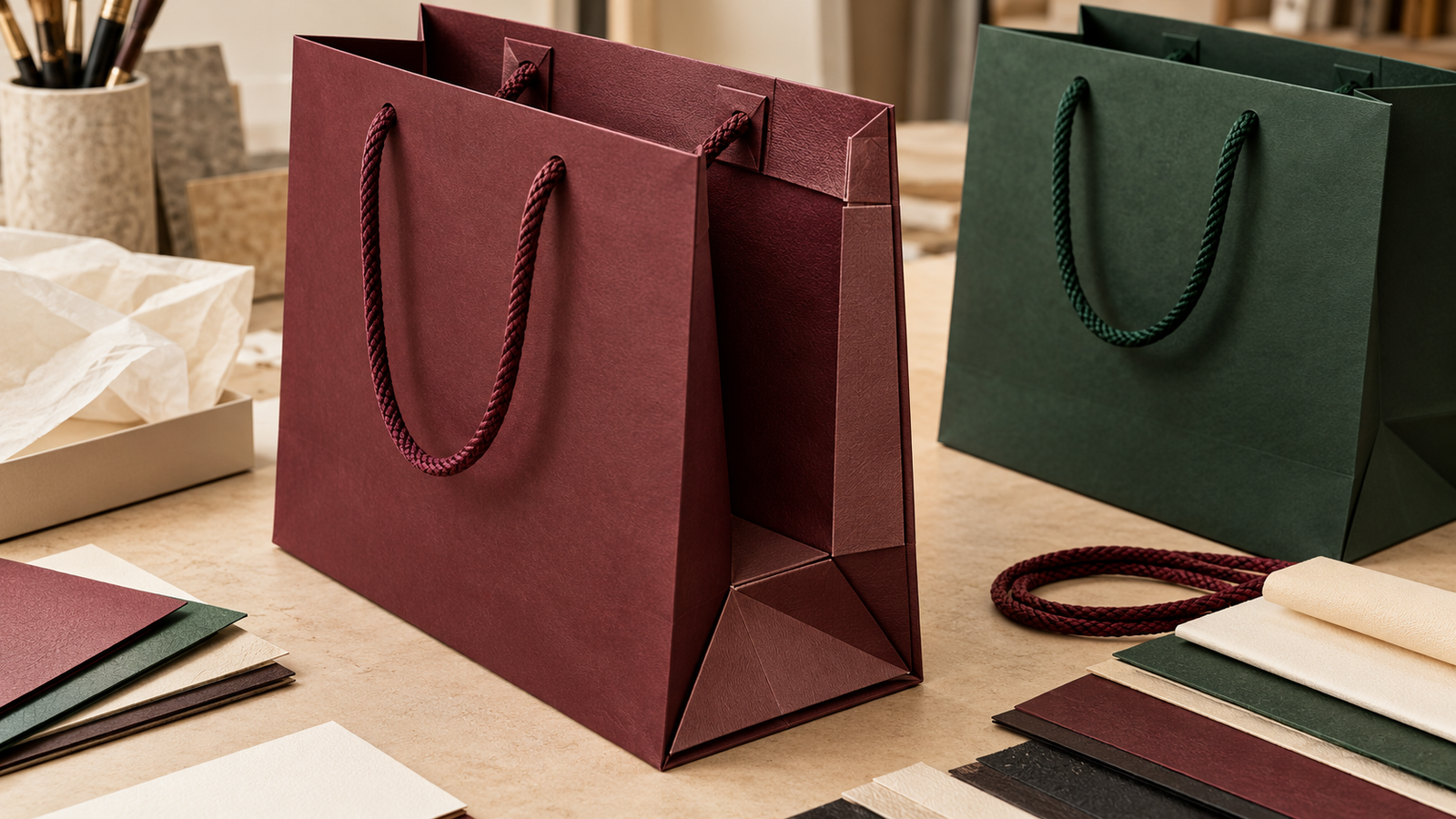
What makes a luxury paper bag durable enough to reuse?
Body and folds
Paper grade, grammage, stiffness, tear resistance, grain direction and converting quality work together. More GSM does not guarantee a better result. Sharp creases, a sound side seam and gussets that reopen without splitting matter across repeated cycles.
Handles and anchors
The handle, knots or glued ends, punched holes, turned top and reinforcement patches create one load path. Choose a comfortable length and material, then test the complete attachment. See our luxury paper bag handle guide for rope, ribbon and paper options.
Base and surface
A correctly sized base insert spreads the load without sliding or telegraphing through the paper. Ink, varnish, foil or coating must also tolerate normal handling. A structurally sound bag that becomes badly marked after one trip will not feel reusable to the customer.
Our guide to luxury paper bag construction explains the complete load path in more detail. For a reuse-led project, ask the supplier to connect every reinforcement choice to a defined failure risk. Extra material added without a purpose can increase cost and may complicate fibre recovery at end of life.
How should reusable paper bags be tested?

Approve a fully converted bag made with the intended paper, adhesive, handle attachment, reinforcement, print and surface finish. Condition samples consistently, pack them with the real product configuration or a representative distributed load, and repeat the planned handling sequence. Check after each cycle rather than only at the end.
A practical repeated-use test sequence
- Load the bag exactly as approved, including boxes, tissue and other internal packaging.
- Lift, carry, set down, reopen and repack it using the intended cycle and handling time.
- Inspect handles, anchor areas, turn-tops, seams, gusset peaks, base corners and surface decoration.
- Record progressive change with photos and the same acceptance criteria for every sample.
- Repeat across enough production-relevant samples to expose variation, then retain the approved method and master sample.
EN 13590:2003 is a European test method for paper carrier-bag durability that uses repeated lifting with a load related to bag size and volume. The industry publication High-quality paper carrier bags explains how material, glue, converting and handles influence durability. Its example target for supermarket bags is not a universal specification for every luxury carrier. Select the method, load and acceptance limit for the actual bag and use case.
Testing should also reflect appearance. Rub surfaces against the expected clothing, counters and transit materials; reopen gussets; assess crease whitening; and check whether ribbon or rope handles fray, twist or transfer colour. Add the results to the paper bag quality-control plan.
Can you print “reusable” on a paper bag?
Only when the wording is accurate for the market and supported by evidence. ISO 14021:2026 sets principles, requirements and guidance for self-declared environmental claims and strengthens the need for documented information supporting their validity. A vague leaf icon, “eco” statement or durable look is not a substitute for a defined claim and evidence file.
For packaging placed on the EU market, the European Commission confirms that Regulation (EU) 2025/40 began applying on a phased basis from 12 August 2026. Article 11 sets criteria for reusable packaging, while later labelling and implementing measures have their own dates. Confirm the brand’s role, the packaging category, destination market and current requirements before approving artwork.
Keep three claims separate
- Reusable concerns repeated use and, in formal definitions, the system that enables it.
- Recyclable concerns collection, sorting and material recycling after the bag becomes waste.
- Responsibly sourced fibre concerns origin and chain-of-custody evidence.
One does not prove the others. State only what the evidence supports.
How do you balance durability with end-of-life design?
A reuse-led bag still needs an end-of-life route. Review the body paper, coating or lamination, inks, foil, adhesives, handles, eyelets, reinforcement boards and labels as one construction. The 4evergreen Circularity by Design Guideline, Version 4 gives current European guidance for fibre-based packaging and notes that final designs may still require evaluation.
A paper-led structure with necessary reinforcement and restrained decoration can support both durability and a credible recycling assessment. That does not mean eliminating every premium detail. It means asking whether each film, metal eyelet, textile handle or extra board is essential, separable or compatible with the intended route. Our recyclable luxury paper bags guide covers this assessment in depth.
What belongs in a reusable paper bag RFQ?
Bag and use specification
- Finished width × gusset × height
- Product and complete packed weight
- Original and later use scenarios
- Target cycles or rotations
- Paper, handle and reinforcement preferences
- Print, finish, surface and appearance limits
- Quantity by size and artwork
Approval and evidence
- Physical sample type and substitutions
- Repeated-use test method, load and pass criteria
- Destination markets and exact claim wording
- Material, sourcing and recycling evidence requested
- Bulk inspection plan and retained master
- Packing method, delivery point and launch date
- Instructions or reuse-system responsibilities
Send the same brief to each supplier so quotations remain comparable. If the reuse model is still uncertain, ask for two proposals: a premium retail carrier designed for likely personal reuse and a formally assessed reusable-packaging route. This exposes the material, testing, operational and documentation differences before artwork approval.
Frequently asked questions
Does a thicker paper bag automatically last longer?
No. Grammage is only one variable. Paper properties, grain direction, folds, seams, adhesives, handle anchoring, reinforcement, base design and packed load all influence durability. Test the complete converted bag.
How many times should a reusable paper bag last?
There is no responsible universal number for every bag. Define the same-purpose reuse model, product, load, conditions, applicable rule and test method. Then set and substantiate a project-specific target.
Can ribbon-handle luxury paper bags be reusable?
They can be designed for repeated handling, but ribbon material, cut edges, colourfastness, attachment and hole reinforcement must be tested with the complete load. Also assess the handle and any eyelets as part of the bag’s end-of-life construction.
Is a reusable paper bag also recyclable?
Not automatically. Reuse and recycling are different attributes. Assess the complete bag against the relevant collection, sorting and paper-mill route after its useful life ends.
Should the bag be approved with the gift box inside?
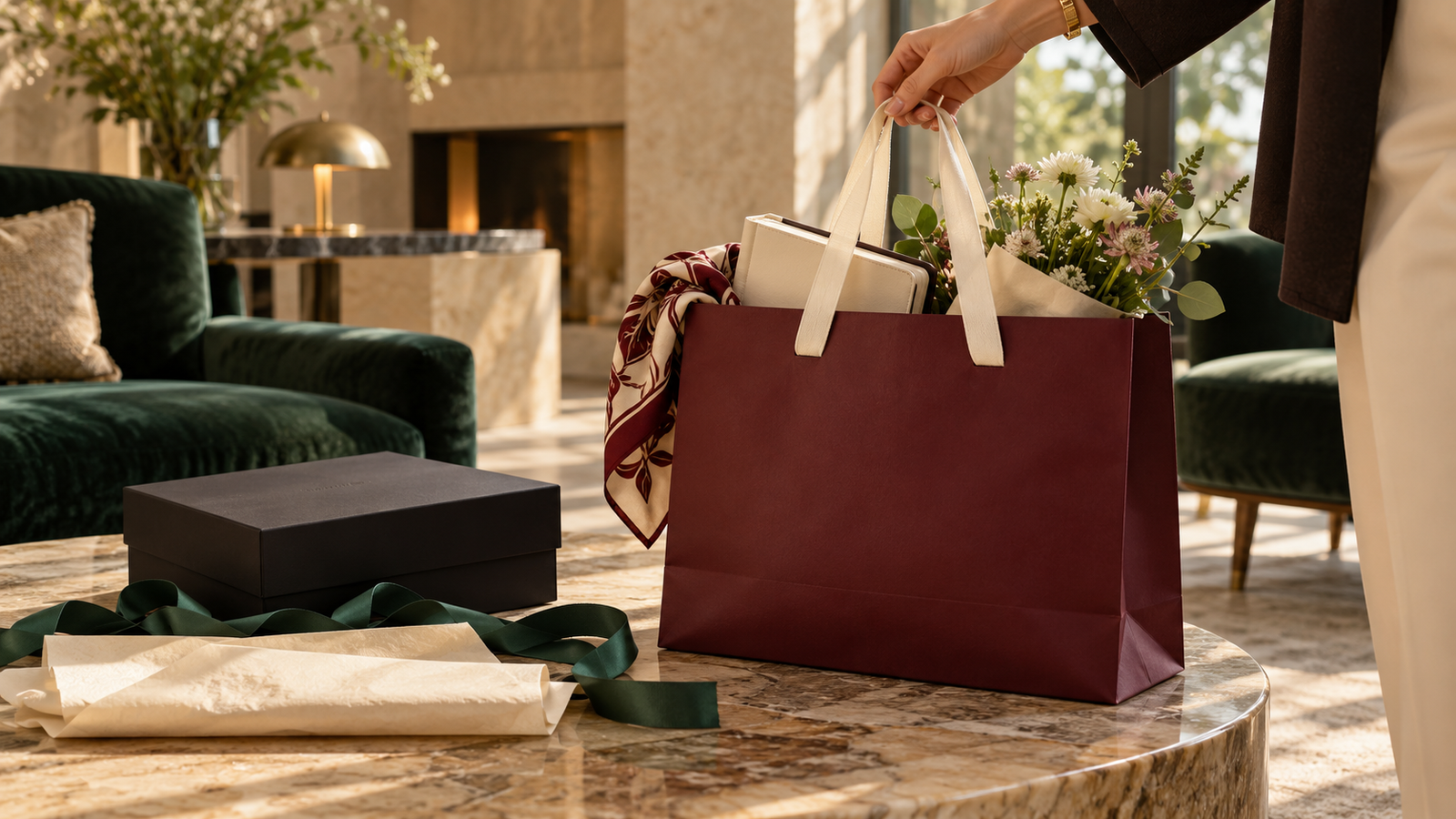
Yes. Product fit, weight distribution and handle comfort depend on the complete pack. Approve the paper bag with the actual gift box, tissue paper, ribbon and any inserts that will be used in the retail handoff.
Build repeat use into the specification
Share your product size, packed weight, intended reuse journey, quantity, artwork and delivery market. Bespoke Packaging can develop luxury paper bags with coordinated gift boxes, tissue paper and ribbon, then plan samples and testing around the real use case.