
CUSTOM SHOE PAPER BAG GUIDE
Custom Shoe Paper Bags: How to Size Bags for Footwear Boxes
Size and specify a premium paper shopping bag around the real footwear box, carrying load and retail handoff.
A custom shoe paper bag should be designed around the finished footwear box, not the shoe alone. The box determines the bag’s internal footprint, opening, proportion and carrying load. The bag must accept it smoothly at the counter, keep it level while carried and arrive at the customer without strained handles, crushed corners or an oversized silhouette.
That makes a footwear shopping bag more than a large branded carrier. It is the final layer of a packaging system that may include the shoe box, tissue paper, dust bag, care card, spare laces, ribbon and receipt. A useful specification connects all of those parts to the real store workflow.
This guide explains the buyer decisions that are specific to boxed footwear. For general measurement terminology, see our luxury paper bag size guide. For seams, gussets, turn-tops and reinforcement, use the paper bag construction guide.
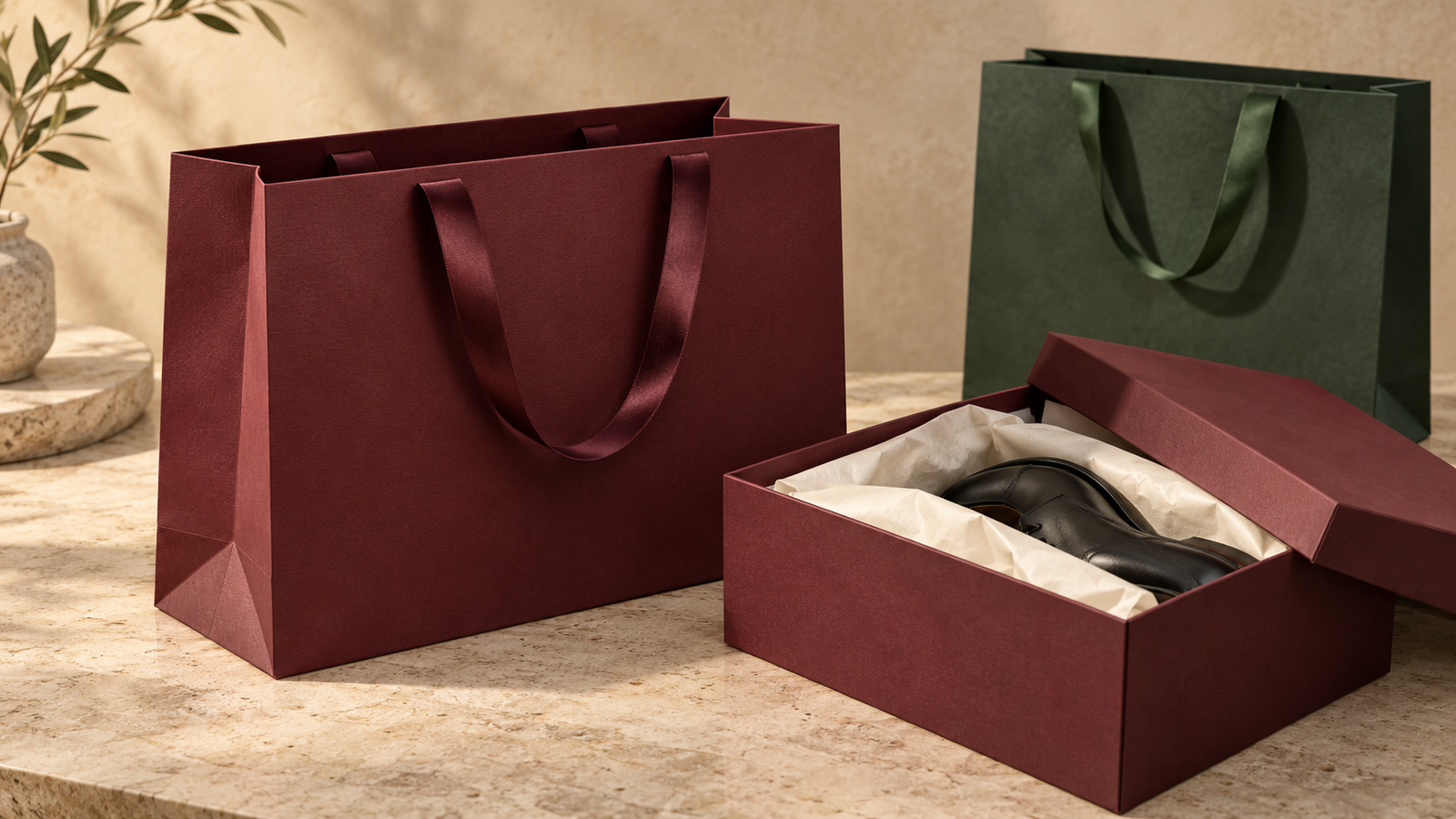
What is the right paper bag for a shoe box?
The right paper bag is one that fits the closed, fully packed shoe box in its intended carry orientation, with enough functional clearance for quick loading but not so much empty space that the box slides or the bag looks disproportionate. Its bottom panel supports the box footprint, its handles suit the packed weight and its paper and finish tolerate retail handling.
| Footwear pack | Bag decision | What to confirm physically |
|---|---|---|
| Low-profile flats or sandals | Compact landscape bag may reduce excess height | The box enters without catching the turn-top or handles |
| Standard sneaker or dress-shoe box | Landscape bag with a stable, box-sized base | The box remains level and corners do not press the gussets |
| Boot box | Longer format, stronger base support and verified handle load | The long box does not sag, tilt or distort the bag |
| Two-box or gift purchase | Dedicated larger format or a planned multi-item bag | The stack is stable and still practical for staff and customer |
These are format principles, not universal sizes. Footwear boxes vary by shoe type, size run, tissue volume, inserts and brand presentation. The supplier should work from actual packed samples or controlled dimensions rather than a category label such as “sneaker box.”
How should you measure a footwear box for the bag?
Measure the box in its finished, closed and sale-ready condition. Record the maximum external length, width and height, including any lid overhang, closure, sleeve or attached component. Also record the packed weight. Do not use a dieline dimension or an empty prototype if the packed box changes shape.
The GS1 Package and Product Measurement Standard provides a consistent method for package dimensions and includes a specific shoebox measurement example. GS1 treats the end panel carrying brand, model, size, colour and point-of-sale barcode as the default front of a packaged footwear item. Your shopping-bag specification can still use the orientation that works best in store, but the measurement source should be named so every supplier quotes from the same data.
Record the carry orientation
Draw or photograph the box as it will sit inside the bag. A long shoe box will usually suit a landscape bag, but the preferred orientation may change when a lid is loose, a sleeve must remain visible or staff add accessories beside the box. Label which box dimension corresponds to the bag width, gusset and usable height.
Measure more than one size in the range
A single shoe style can use several box sizes. Measure the smallest and largest formats that a proposed bag must serve, then test the awkward combinations. If the largest box only fits when forced through the opening, or the smallest slides badly, the range may need two bag sizes rather than one compromise.
How much clearance should a shoe paper bag have?
There is no reliable universal clearance number for every paper, box and construction. Clearance must account for the finished internal space after folds, turn-tops, base board, paper thickness and manufacturing tolerance. It must also reflect how quickly store staff need to load the box and whether tissue, a receipt envelope or accessories share the bag.
- Place the real packed box in the intended orientation.
- Check that it passes through the opening without scraping the lid corners.
- Confirm that the base opens fully before the box is inserted.
- Make sure the top of the box remains below the handle attachments and turn-top.
- Carry the loaded bag, set it down and remove the box several times.
- Repeat with the largest production-tolerance box and a converted bag sample.
Too little clearance slows the counter, scuffs the box and pushes the gussets outward. Too much clearance uses more paper and shipping volume, weakens the visual fit and lets the box move. The target is a controlled, repeatable loading action rather than the smallest possible theoretical cavity.
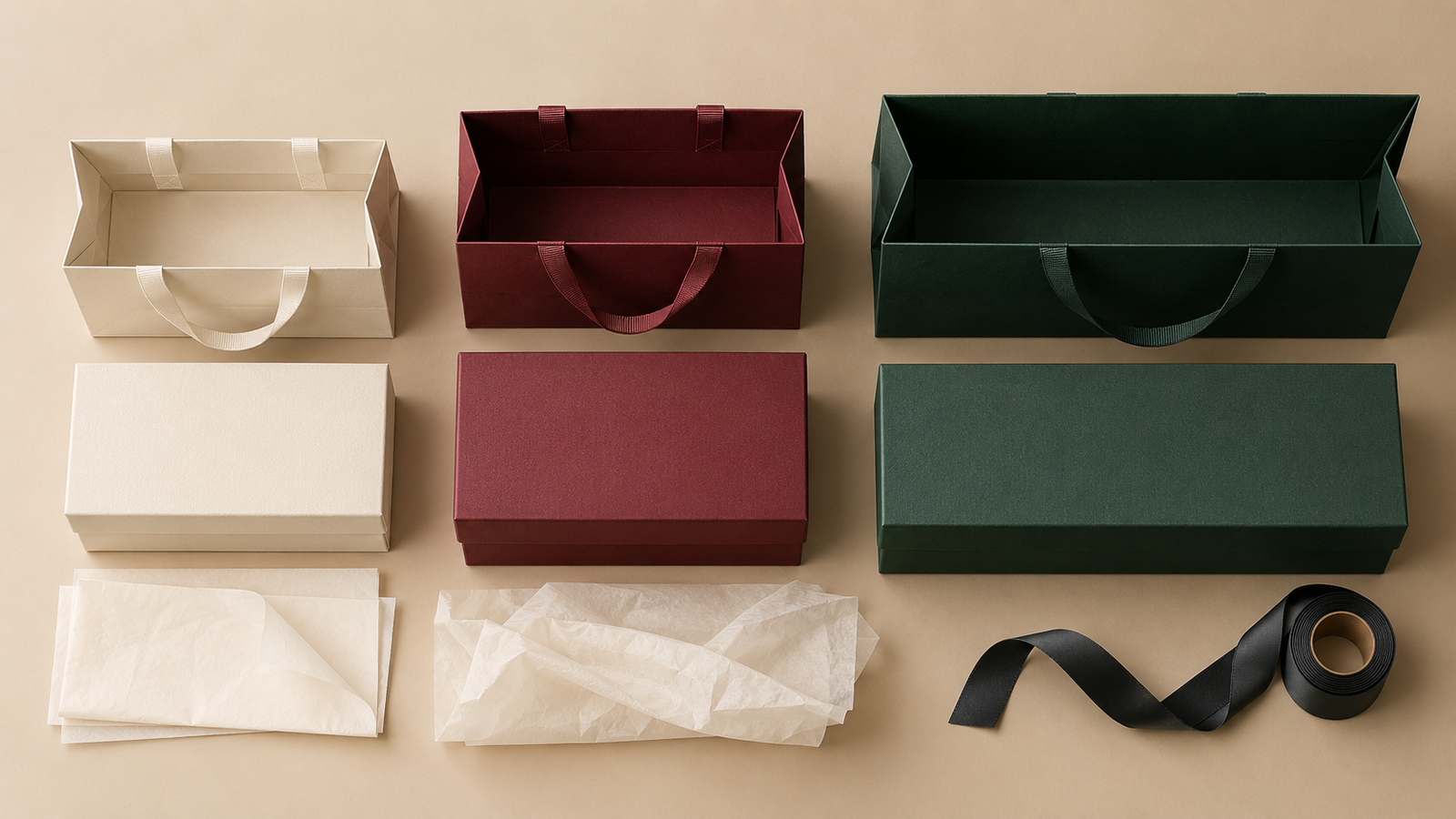
Should a shoe bag be portrait or landscape?
Most boxed footwear benefits from a landscape paper bag because the box can sit on its broad face and the handles can be positioned across the long top edge. This creates a lower centre of gravity and a familiar retail silhouette. However, proportion should follow the actual box and customer journey, not a style rule.
- Landscape: usually the clearest choice for sneakers, formal shoes and flat rectangular boxes.
- Tall landscape: useful when tissue, a dust bag or small accessory carton sits above the shoe box.
- Portrait: may work for compact footwear packs or a mixed fashion purchase, but test stability carefully.
- Extra-long format: may be required for boots; assess base stiffness and carry comfort before approving the look.
Ask the supplier for a blank size prototype before artwork approval. A flat rendering cannot show how a wide gusset opens, whether the box catches the handles or how the loaded bag sits against the customer’s leg.
What construction supports a boxed footwear load?
The shoe box creates a concentrated rectangular load. The bag must transfer that weight from the base through the side walls and handle attachments without tearing or losing shape. Paper weight alone does not describe this performance. Fibre direction, fold quality, adhesive coverage, gusset geometry, turn-top reinforcement, handle attachment and base-board design work as a system.
- Base board: spreads the box load, helps the bottom open squarely and reduces local sagging.
- Turn-top reinforcement: supports the area around rope or ribbon handle holes.
- Clean side and bottom seams: maintain the load path when the bag is lifted.
- Controlled gussets: open fully around the box without sharp stress points.
- Matched adhesives: must suit the chosen paper, coating, fold and expected environment.
Define performance with the real packed box and handling route. For production approval, use a documented paper bag quality-control plan covering dimensions, load checks, handle attachment, seams, appearance and packing.
Which handles work well for footwear shopping bags?
Cotton rope and wide ribbon are common premium options because they provide a generous contact area and can coordinate with the shoe box or brand palette. Paper handles may support a fibre-focused design direction when the complete construction and load are validated. The decision should consider packed weight, handle drop, customer comfort, storage, automatic or hand assembly and end-of-life claims.
Handle drop matters on a wide shoe bag. The customer needs enough space to grip both handles without the top edge pressing against the hand, but excessively long handles can let the bag swing and tilt. Test the intended carry method with a range of users and with winter clothing if the bag will be used seasonally. Compare materials in our luxury paper bag handle guide.
How should paper and finishes be chosen for footwear retail?
Footwear bags are often wide, handled repeatedly and stored flat before use. The paper should fold cleanly, resist visible scuffing at corners and support the chosen print and finish without cracking at conversion lines. A textured uncoated sheet can create a quiet tactile effect; a coated sheet can support crisp imagery; responsibly specified recycled content may suit a material-led story. Each choice still needs a physical print and conversion sample.
Use foil, embossing, spot gloss or lamination only when it contributes to the brand experience and remains compatible with the paper, folds and desired recycling route. Keep artwork away from gusset creases, base folds and handle holes. See the paper bag finishes comparison and artwork handoff checklist before finalising the dieline.
How does the store packing workflow change the specification?
A beautiful bag can still fail if it is slow to open or difficult to pack. Observe the real counter sequence: where flat bags are stored, how staff open the base, whether the shoe box is checked before packing, where tissue and receipts are added, and how the completed bag is handed over. The bag should support that sequence without forcing staff to bend the box, crush tissue or reach past the handles.
- Can staff open the bag one-handed or quickly during a busy period?
- Does the box label need to remain accessible before final handoff?
- Is tissue used inside the shoe box, above it in the bag, or both?
- Are care products, spare laces or a receipt envelope packed beside the box?
- Will the bag stand safely on the counter while staff complete the sale?
- Can the packed bag pass through security gates, doors and storage areas comfortably?
How many shoe-bag sizes should a brand order?
Start with a box matrix rather than an arbitrary bag range. List each footwear-box format, annual or seasonal volume, packed weight and proportion. Group boxes that can share a bag without compromising loading or presentation. A small, medium and boot format may be more useful than three visually equal steps, but the correct family depends on the actual product mix.
Consolidating sizes can reduce artwork versions, inventory and minimum-order pressure. Too much consolidation creates wasted space and a weaker retail experience. Model both the unit price and the operational cost of holding each SKU, then approve the range using loaded samples photographed together.
How can the bag coordinate with the shoe box, tissue and ribbon?
A coordinated footwear set does not require every component to use the same colour and finish. Give each layer a role. The shoe box may carry the strongest product information, the tissue can introduce a repeat pattern, the ribbon can provide a tactile accent and the paper bag can create the final outward-facing brand moment.
Review colour on the actual substrates because white points, texture and coating change the result. Check whether the bag mark remains clear when the handles fall forward, whether the tissue looks intentional above the box and whether the complete set feels balanced when carried. Our luxury packaging set guide covers the wider coordination process.
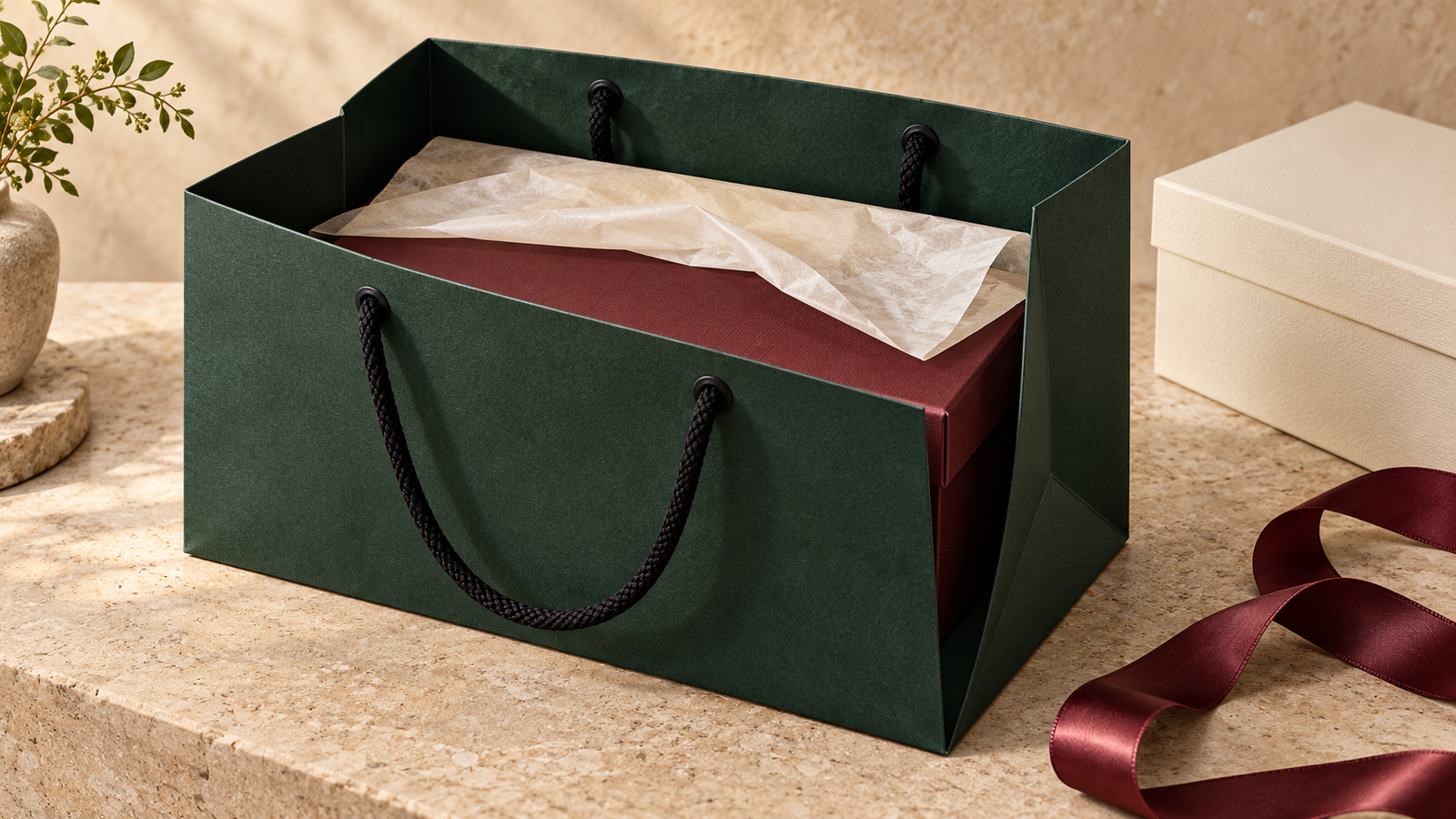
What should a footwear bag sample prove?
A converted sample should answer fit, workflow, appearance and performance questions before mass production. Begin with a blank structural prototype if the size is new, then use a fully printed and finished sample when colour, surface effects and handle coordination matter.
- The largest approved shoe box enters and leaves without damage.
- The smallest assigned box does not move excessively.
- The base opens flat and supports the packed load.
- Handles feel comfortable and remain secure through repeated carrying.
- Print and finishes stay clear of folds and hardware.
- The bag stands square after packing and after a realistic carry period.
- Staff can complete the packing sequence at an acceptable pace.
- The approved bag can be packed flat for shipment without marking its visible panels.
Keep an approved master with the signed specification, colour references, box sample and test conditions. The custom paper bag sampling guide explains how structural prototypes, colour proofs, finish strike-offs and pre-production samples answer different questions.
Should the bag be transit-tested with the shoe box?
Test the complete packed system when distribution or handling risk justifies it. A retail paper bag is not a shipping carton, but its performance can still be affected by flat packing, export-carton compression, humidity, long storage and repeated store handling. Define whether the bag will be delivered to stores, used at events or included inside an e-commerce shipper.
The International Safe Transit Association lists different procedures for parcel, retail, unit-load, direct-import and other distribution systems. Work with the supplier and test laboratory to choose a route-specific protocol rather than applying a random drop or load test. Our paper bag shipping guide covers export packing, moisture control, receiving and storage.
How should sustainability claims be handled?
Describe verifiable attributes precisely. Certified fibre sourcing, recycled content and recyclability are different claims and require different evidence. If FSC labelling is requested, confirm the supplier’s current certificate scope, the order claim and the approved trademark artwork. FSC published its revised trademark standard in January 2026, so current requirements should be checked for the production date rather than copied from an old bag.
For recyclability, assess the complete construction: body paper, inks, coatings, metallic decoration, handles, reinforcement and adhesives. The 4evergreen Circularity by Design Guideline, updated in 2026, gives current European design guidance for paper-based packaging and notes that final designs may still require testing for their actual recycling route. Avoid broad claims based only on the appearance of the paper.
What should be included in a shoe paper bag quote request?
- Finished external dimensions and packed weight for every assigned shoe box
- Box-to-bag orientation and required loading clearance
- Bag quantities by size, delivery schedule and destination market
- Paper direction, colour, texture and any sourcing or recycled-content requirement
- Print colours, artwork files and finish layers
- Handle material, colour, width or diameter and target drop
- Turn-top, handle and base reinforcement requirements
- Tissue paper, ribbon and other coordinated packaging components
- Required structural, colour, finish and pre-production samples
- Inspection, load-check, packing, carton-marking and shipping expectations
Send photographs or physical samples as well as numbers. A clear pack-out image prevents confusion about orientation, tissue placement and accessories, while a shared quote brief makes supplier options easier to compare.
Frequently asked questions about custom shoe paper bags
Can one paper bag fit every shoe box?
Only when the box range is genuinely compatible. Test the smallest and largest assigned boxes for loading, movement, proportion and carry comfort. Many brands need a standard footwear bag plus a longer boot or multi-box format.
Should the shoe box lie flat inside the bag?
Usually yes. Supporting the box on its broad face often improves stability and protects the lid, but the correct orientation depends on the box closure, label, accessory layout and store workflow. Verify it with a loaded sample.
Does a heavier paper automatically make the bag stronger?
No. Paper properties matter, but strength also depends on grain direction, seams, gussets, handle attachments, reinforcement, base support, adhesives and manufacturing control. Specify and test the complete bag with the packed footwear box.
Can tissue paper go above the shoe box in the shopping bag?
Yes, when the bag height and retail presentation are designed for it. Keep tissue clear of handle holes and allow staff to place it consistently without preventing the bag from standing or making the box difficult to remove.
What sample should be approved before a footwear bag order?
Approve at least a converted structural sample with the real packed box. When colour, finish and handle coordination are important, also approve a fully printed and finished pre-production sample against documented references.
Build the bag around the box customers actually carry
A strong footwear shopping bag starts with the finished shoe box and the real retail handoff. Measure the packed format, choose a stable orientation, prove the loading clearance, engineer the base and handles for the complete load, and approve the bag with tissue, ribbon and accessories in place. That creates a premium result that looks deliberate because it works deliberately.
Specify a shoe paper bag that fits your real box
Share your footwear-box dimensions, packed weight, estimated quantities, delivery market and brand direction. Bespoke Packaging can help develop a coordinated paper bag, shoe box, tissue and ribbon specification for quotation and sampling.