
LAMINATED PAPER BAG BUYER GUIDE
Laminated Paper Bags: A Buyer’s Guide for Luxury Retail
Compare matte, gloss, soft-touch and anti-scratch surfaces, then specify the film, print, folds, testing and recovery evidence behind the finish name.
Laminated paper bags are printed paper shopping bags with a film bonded over the surface to change sheen, touch and handling performance. Matte, gloss and soft-touch are visual directions, not complete specifications. A buyer should also confirm the actual film and adhesive, paper and ink system, fold behaviour, scuff standard, decoration sequence and evidence for the intended recycling route.
The short buyer answer
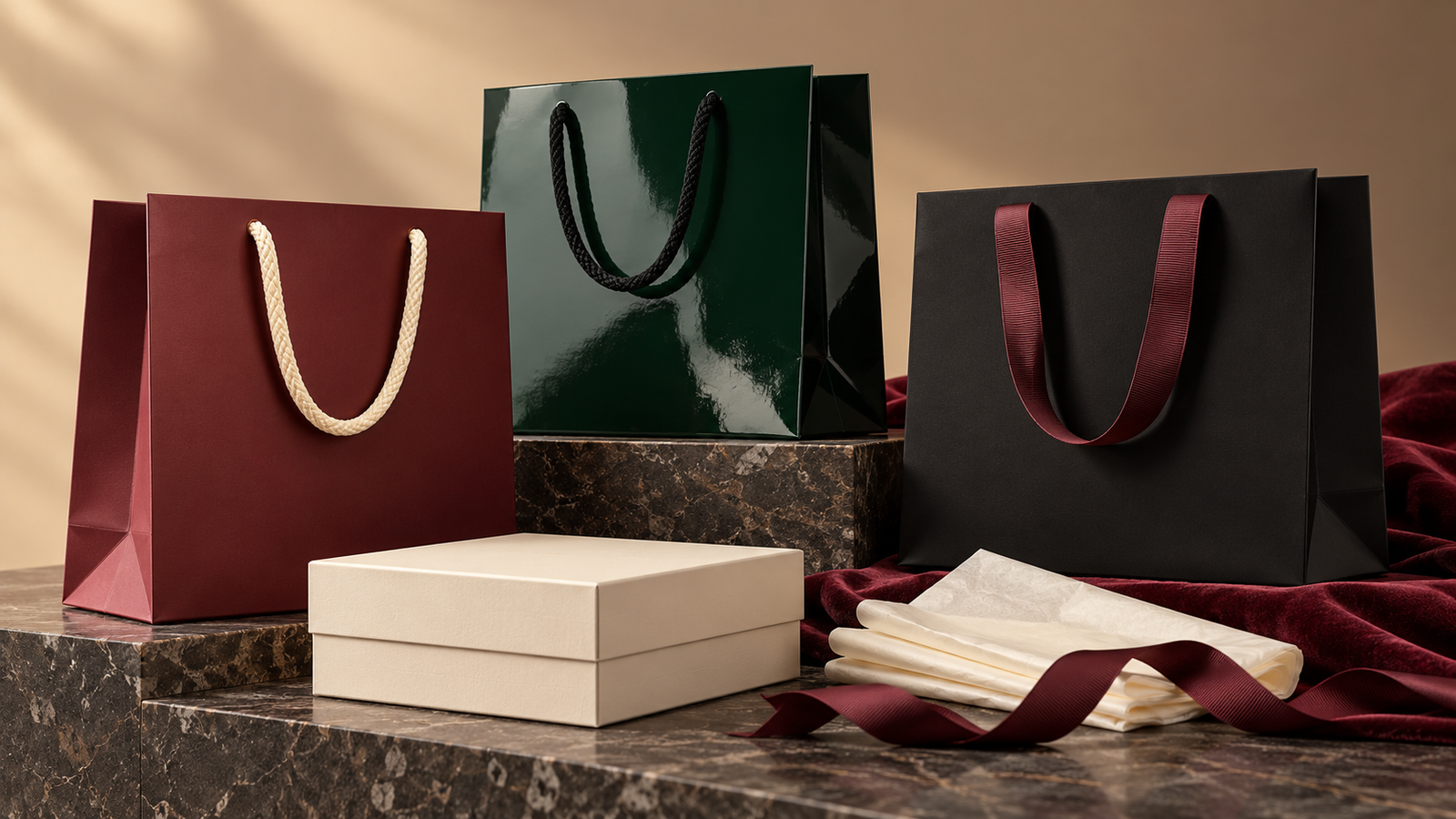
Choose lamination when a printed luxury surface needs a defined sheen or tactile effect and the extra layer solves a real handling problem. Choose an unlaminated or coated-paper route when natural paper character, lower material complexity or a different recovery strategy matters more. In either case, approve a finished converted bag—not a film swatch alone.
What is a laminated paper bag?
In luxury retail packaging, lamination usually means bonding a transparent or coloured film over a printed paper sheet before it is cut, creased and converted into a bag. The film changes the way light meets the artwork and how the surface feels in the hand. It may also help the print tolerate routine rubbing, dust or brief incidental moisture, but it does not make the finished paper bag waterproof or indestructible.
The word “laminated” is still incomplete. The 2026 4evergreen Circularity by Design Guideline, Version 4 distinguishes several coating and film-lamination constructions and explains that their recycling behaviour depends on the complete material combination and the paper-mill route. Ask the converter to identify the proposed film, adhesive and coverage rather than treating matte, gloss or soft-touch as the material description.
Which laminated surface suits a luxury paper bag?

| Surface direction | Visual and tactile effect | Main approval risk | Useful starting point |
|---|---|---|---|
| Matte lamination | Low glare, smooth touch and restrained colour | Scuff visibility, edge whitening, fingerprints and inconsistent sheen | Luxury fashion, beauty and gifting where controlled contrast matters |
| Gloss lamination | High reflection and stronger apparent colour saturation | Glare, scratches, waviness and reflections that compete with artwork | Bright graphics or a deliberately polished retail expression |
| Soft-touch lamination | Velvety, tactile matte surface | Marks, rub change, batch consistency and compatibility with later finishes | Projects where touch is a deliberate part of the brand experience |
| Anti-scratch matte | Matte appearance with a specified resistance improvement | Assuming “anti-scratch” means scratch-proof without a test method | Dark or high-contact bags that need a measurable handling target |
| Unlaminated or coated paper | Natural or printed-paper character with no added film layer | Ink rub, dirt pickup, moisture response and whether the paper suits the artwork | Material-led designs and briefs seeking lower construction complexity |
These are decision directions, not universal performance grades. Two suppliers can use the same “soft-touch” description for different films. A dark matte sample can look flawless under one light and reveal handling marks under another. Record the exact approved construction and retain the physical master.
When does lamination earn its place?
It supports the artwork
Full-coverage offset printing on smooth paper often uses a film to establish the final surface. Matte can quiet a rich burgundy or black field; gloss can make colourful graphics feel brighter. The selected route should be built into the paper bag printing specification from the start.
It supports real handling
A film can help protect printed colour during counter packing and carrying, but the benefit must be checked on the real bag. Heavy contact at gussets, corners, handle areas and carton interfaces can still create scratches, whitening or film lift.
It creates useful contrast
A matte base can support a small foil logo or selective gloss pattern. That hierarchy is usually clearer than adding several effects across the same area. See the broader luxury paper bag finishes guide before combining processes.
When is an unlaminated bag the better choice?
Skip lamination when the natural texture and shade of an uncoated, coloured-through or kraft paper is central to the design; when the proposed film adds no necessary function; or when the brand wants to reduce non-fibre components and can meet appearance requirements another way. A suitable varnish or coating may solve a limited print-rub need, but it is not automatically equivalent to film lamination.
- Use material swatches to compare touch, colour and ink response before artwork is final.
- Ask whether the unlaminated ink system needs a defined rub or set-off check.
- Inspect dark solids and folded areas, where cracking or abrasion may be easiest to see.
- Confirm whether foil, embossing or another focal finish remains compatible with the chosen paper.
- Evaluate the complete construction against the destination recovery route rather than assuming “no film” proves recyclability.
How does lamination interact with foil, spot UV and embossing?
Process order matters. A supplier may print first, laminate the sheet and then apply foil or selective gloss, but the correct sequence depends on the materials and equipment. Foil adhesion, spot-varnish contrast and embossing definition must be proven on the selected stack. Artwork should keep critical effects clear of folds, seams, turn-tops and handle holes unless the converter has planned for them.
Ask for a process-stack answer
A useful quotation states the paper, print, ink coverage, lamination film, adhesive, later decoration, creasing and conversion route. “Matte laminated with gold logo” is not enough to compare two suppliers or reproduce an approved result.
What should a laminated bag sample prove?
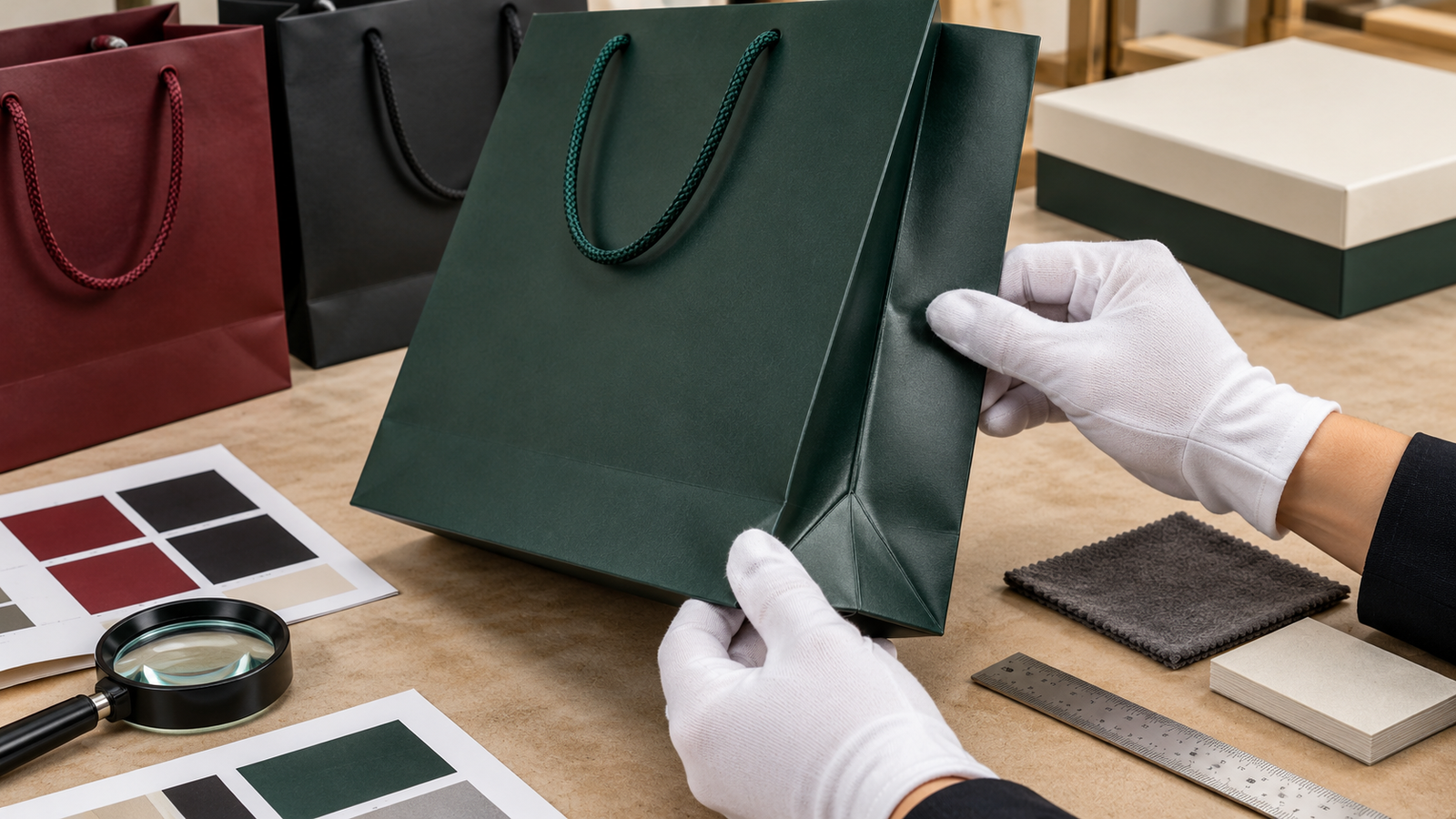
- Colour and sheen: inspect the bag upright and moving under agreed lighting. Compare broad panels, gussets and turned areas.
- Adhesion and edges: look for bubbles, silvering, tunnelling, lifting, wrinkles or exposed edges after creasing and conversion.
- Fold behaviour: open and close gussets, flex the top and examine scores for cracking, whitening or delamination.
- Handling marks: use clean dry hands and the actual retail packing process to check fingerprints, oils, scuffs and rub change.
- Decoration: inspect foil, spot UV or relief for adhesion, registration, edge definition and consistency on the laminated surface.
- Packed performance: place the real rigid box, tissue, ribbon and product inside; carry, set down and repack the bag before judging appearance.
- Production reference: sign and retain the approved converted sample with written tolerances and approved material identifiers.
ASTM D5264-98(2019) describes abrasion testing for printed materials on flat substrates. It can provide a controlled reference for a print or surface system, but a flat rub result does not replace converted-bag checks at folds, corners and handle areas. Put both the laboratory reference and practical handling sequence into the paper bag quality-control plan.
Are laminated paper bags recyclable?
There is no responsible universal yes or no. The answer depends on the paper share, film, adhesive, inks, foil, handles, reinforcement, labels, collection system, sorting and the paper mill expected to receive the material. The Cepi paper-based packaging recyclability guidelines explain that coatings and laminates can provide useful functions but must be designed so they do not hamper the intended recycling process.
4evergreen’s current guideline uses different recycling pathways and notes that some designs require testing. Do not transfer a statement about a base paper, film family or sample material to the finished bag without evidence. Our recyclable luxury paper bag guide shows how to assess the complete construction and keep sourcing, recycled content, recyclability and reuse claims separate.
For bags placed on the EU market, the European Commission confirms that Regulation (EU) 2025/40 began applying on a phased basis from 12 August 2026, while several recyclability measures and secondary rules have later dates. Record destination markets early and obtain current market-specific advice before printing an environmental claim.
What belongs in a laminated paper bag RFQ?
Bag and surface specification
- Finished width × gusset × height
- Product, gift box and maximum packed weight
- Paper grade, shade and grammage direction
- Print process, colours and coverage
- Matte, gloss, soft-touch or tested anti-scratch target
- Film, adhesive and coverage identification
- Handle, reinforcement, turn-top and base construction
Approval and commercial details
- Foil, varnish or embossing sequence
- Sample stages and represented materials
- Rub, fold, adhesion and appearance criteria
- Signed master and bulk inspection method
- Quantity by size and artwork
- Packing protection and delivery destination
- Required material and recovery evidence
Send the same specification to every supplier. If the correct surface is still uncertain, request two production-relevant routes—such as matte film and an unlaminated coated-paper alternative—using the same artwork and construction. Comparing physical samples is more reliable than comparing finish names or screen renders.

Frequently asked questions
Is matte lamination always more luxurious than gloss?
No. Matte often creates a restrained look, while gloss can suit vivid artwork or a deliberately polished identity. Luxury comes from the paper, colour, construction, handle, proportions and execution working together.
Is soft-touch lamination the same as matte lamination?
Soft-touch is generally a matte surface selected for a distinctive velvety hand-feel, but product names and performance vary. Approve the exact film on the real printed paper and check marking, rubbing and later decoration.
Are laminated paper bags waterproof?
No general waterproof claim should be made. A film may improve surface resistance to brief incidental moisture, but bag openings, paper edges, folds, seams and handle holes remain potential entry points. Define the actual exposure and test it.
Can you foil stamp over lamination?
Often yes, when the foil, film, adhesive, heat, pressure and artwork are compatible. Approve a physical strike-off or converted sample. The foil stamped paper bag guide covers artwork, sampling and inspection in more detail.
Should matching gift boxes use the same laminate?
Not necessarily. A coordinated set can repeat colour or one focal finish while letting each material perform its own role. Approve the bag with the actual rigid gift box, tissue paper and ribbon under the same lighting.
Specify the surface—not just the finish name
Share your bag size, artwork, quantity, surface direction, product pack and delivery market. Bespoke Packaging can compare laminated and unlaminated luxury paper bag routes, prepare samples and coordinate matching boxes, tissue paper and ribbon.